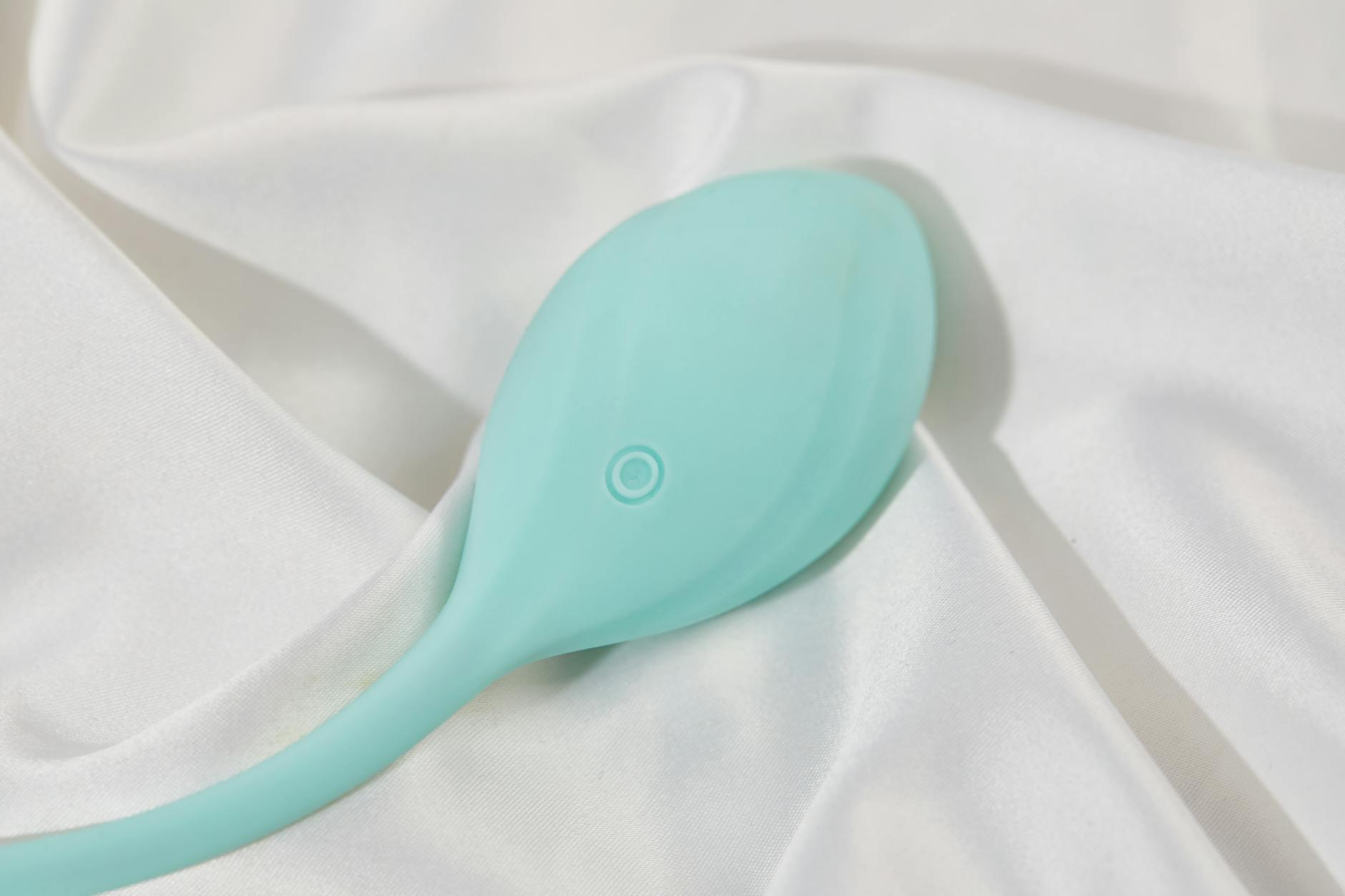
Let's start with the number everyone wants to know
Most people with vulvas reach orgasm with a lemon clitoral vibrator in 3 to 8 minutes. Some get there in 90 seconds. Others take 12 to 15 minutes and still find it wildly easier than manual stimulation. If you're asking this question because you're wondering if something's wrong with you or your vibrator, here's the honest part: the timeline tells you almost nothing about whether you're doing it right.
But the factors that change your personal timeline? Those tell you everything.
Why the range is so wide
Your timeline depends on six things, almost none of which are your fault.
One. Your current arousal level when you start. If you pick up a lemon vibrator while already warmed up from foreplay or fantasy, 3 to 5 minutes is typical. If you're starting from baseline, neutral state, add 5 to 10 minutes. This isn't laziness or dysfunction. Your nervous system genuinely needs time to shift into parasympathetic mode. Rushing that shift makes the vibrator feel like noise instead of pleasure.
Two. Sensitivity in your specific anatomy. Some people are born with denser nerve clustering in their clitoral glans. This isn't about being "easy" to please. It's literally neuroarchitecture. A lemon vibrator will hit those nerves faster and more directly. Other people have nerve distribution spread across the external vulva or higher up in the clitoral body. For them, the Lem works beautifully, but the timeline shifts ten minutes forward because the sensation needs to build.
Three. What you're used to. If you've been using a wand vibrator, switching to a lemon sucker like the Lem is a different stimulus. The Lem uses pulsing air_suction instead of linear vibration. Your body literally needs to learn what it's feeling. First time? Expect to add 5 to 10 minutes. By the third or fourth session, your nervous system has mapped the sensation and recognized it as pleasure. The timeline collapses.
Four. Hormonal phase, if you menstruate. During the follicular phase (first half of your cycle), when estrogen is climbing, orgasms tend to arrive 20 to 30 percent faster. Luteal phase? Expect it to take longer. This isn't a bug. It's biological design. Your body's responding to hormonal cues, not personal failure.
Five. Stress and activation level before you start. If your nervous system is already wound up (work stress, relationship tension, hypervigilance), your body needs longer to access pleasure. The clitoral glans actually contains parasympathetic nerve endings. You cannot reach orgasm from a sympathetic state (fight, flight, freeze) into a parasympathetic state (rest, digest, pleasure) in two minutes. You can try. You'll just feel frustrated.
Six. The quality of the environment and your expectations. This is the one most people underestimate. Are you in a space where you can relax and take time? Are you alone? Is your attention actually here, or are you splitting focus? Are you convinced you "should" orgasm in five minutes because you read that somewhere? That pressure itself activates your sympathetic nervous system and lengthens the timeline by another five to ten minutes.
What actually speeds things up (without forcing it)
If you want to nudge your personal timeline shorter, these are the moves that work.
Warm up before the toy arrives. Spend 10 to 15 minutes with fantasy, reading, your partner, or your hands first. By the time the Lem touches you, your body's already halfway to arousal. This alone collapses your timeline by about 40 percent for most people.
Start on a lower intensity setting. Counterintuitively, jumping straight to the highest setting actually lengthens arousal because it can feel overstimulating. The Lem has multiple patterns and intensities. Start on pattern 1 or 2 and stay there for a couple minutes while sensation builds. Your nervous system will tell you when to shift up. That gradual climb actually reaches orgasm faster than blunt-force stimulation.
Add sensation elsewhere. Internal penetration, nipple play, or even just pressure from your hands on your thighs creates a more complex signal that your nervous system processes as "definitely pleasure." The clitoral suction from the Lem plus additional sensation typically cuts 3 to 5 minutes from the timeline.
Know your angle. Not every part of the clitoral glans is equally sensitive. Some people respond faster to stimulation on the left side, others the right, others the top where the hood sits. Spend one or two sessions experimenting with different angles and pressures. The moment you find your angle, the timeline drops by about 50 percent because you're directly targeting the densest nerve cluster.
The timeline is less important than you think
Here's what I tell clients in my practice: if you're using a lemon vibrator and reaching orgasm in any consistent timeframe, that's the whole point. Whether it's three minutes or thirty doesn't matter as long as it's working and you're enjoying it.
Where the timeline actually matters is when it suddenly shifts. If you typically orgasm in 5 minutes with your Lem and suddenly it's taking 20, something's changed. Could be hormonal. Could be stress. Could be that your nervous system's picked up on tension in a relationship. That shift is worth paying attention to because it's information. It's not a malfunction.
The worst thing you can do with a lemon clitoral vibrator is clock-watch. The moment you're checking the time or comparing your timeline to someone else's, you've activated your sympathetic nervous system. You've turned pleasure into performance. And pleasure cannot coexist with performance.

Photo by IFONNX Toys on Pexels
Common timeline mistakes people make
Mistake one: Starting too high. You pick up your Lem, jump straight to intensity 5, and expect results in 90 seconds. Your nervous system hasn't caught up. Your body's flooded with sensation but not arousal. It feels overwhelming instead of pleasurable. Back off to intensity 2 and let it build. This alone adds 10 minutes but makes those minutes actually good.
Mistake two: Assuming you're broken if it takes longer than you've heard. Most timelines you read online are either from people with highly sensitive anatomy or from people downplaying how long they actually took. Both are sources of bad data. Your timeline is your timeline. Longer doesn't mean broken. It means your nervous system takes a different path to orgasm. That path is still totally valid.
Mistake three: Treating it like a sprint instead of a journey. A lemon vibrator is designed for pleasure, not speed. If you approach it as "get to the finish line as fast as possible," you miss the whole experience. Some of the most satisfying sessions are the ones where you're not tracking time at all. You're just exploring sensation for 15 or 20 minutes because it feels good to be in your body. Sometimes those sessions end in orgasm. Sometimes they don't. Both are okay.
Mistake four: Using it when you're not actually in the mood. If you reach for the Lem because you think you "should" or because you want to prove something to a partner, your timeline will stretch into infinity. Your body knows the difference between genuine desire and obligation. Genuine desire feels faster, easier, and more satisfying. Obligation feels like work. Only use the toy when you actually want to.
Factors that commonly extend the timeline beyond normal
If your timeline has suddenly lengthened or if you've never been able to orgasm with a lemon vibrator at all, here are the most common culprits.
You're in a high-stress period. Work chaos, relationship tension, grief, or family stuff activates your sympathetic nervous system. Orgasm requires parasympathetic activation. You literally cannot have both at the same time. Give yourself permission to pause the toy and come back when the acute stress has passed. Or use the toy as a meditation tool just to ground into your body, without the pressure of reaching orgasm.
The mental narrative is working against you. If you're carrying beliefs like "I should be able to come faster" or "Other people don't need this much time" or "Something's wrong with me," those beliefs are being processed by your nervous system right alongside the physical sensation. Your brain's a neurochemical powerhouse. Negative beliefs literally suppress the biochemistry of pleasure. Reframe. You deserve to take the time you need. That's not broken. That's knowing yourself.
There's a mismatch between the toy and your anatomy. The Lem works beautifully for people who enjoy direct clitoral suction. But if your body responds better to broader pressure or to internal stimulation, the Lem alone might not be enough. Combine it with a partner's touch, or reach for a different tool that suits your anatomy. There's no "one toy for everyone."
You're not actually relaxed enough to access pleasure. This is clinical observation: people who struggle with orgasm timelines are almost always people running high sympathetic activation. They're tense in the shoulders, jaw, belly. They're holding their breath. The nervous system can't access the pleasure circuits while you're locked in a freeze response. Take five minutes before using the toy to breathe deeply, stretch, warm up your body. Literally warm it up. Temperature, muscles, mental space all matter.
If timing matters to you: what realistic looks like
Here's what the data actually shows, without the performance pressure.
For people who've used a lemon clitoral vibrator consistently (more than twice), the average timeline is 5 to 7 minutes from first touch to orgasm. The mode (most common answer) is actually 6 minutes. Some variation is totally normal. Three to 10 minutes is completely average. Faster doesn't mean better. Longer doesn't mean broken.
For first-time users or people switching from a different toy type, add 5 to 10 minutes. Your nervous system needs to learn what it's feeling. That learning is not a waste. It's how you build a relationship with your body.
For people in high-stress periods or those with hormonal factors playing in, 12 to 20 minutes is entirely normal. There's nothing wrong here. Your body's working with what it has.
The timeline that matters is the one that works for you. Not the one you've read about or the one your partner has or the one you think you should have. Your body. Your timeline. That's the only one that counts.
FAQ: Your most asked questions about lemon vibrator timing
Why do I orgasm faster with a partner than alone with my lemon vibrator?
Partner presence activates different neural pathways. There's physical touch, emotional connection, perceived acceptance. You're not holding any of the performance pressure because your partner's doing some of the work. Solo, you're entirely responsible for the experience. That small shift in responsibility can activate performance anxiety, which delays orgasm. Solution: try using your lemon vibrator during partnered play instead of solo first, or remind yourself that solo time is purely for your pleasure, with zero external expectations.
Is it normal that my timeline has gotten longer over time?
Completely. If you've used the same toy regularly for months or years, your nervous system adapts. It's called habituation. You need more complexity or novelty for the same response. Try different patterns, different angles, different speeds. Or take a break from the toy for a few weeks and let your sensitivity reset. Both approaches work. It's not a sign your pleasure is fading. It's a sign your body's smart and adapts.
My partner wants me to orgasm faster with my lemon vibrator. How do I handle this?
This is a relationship conversation, not a body conversation. Your partner is expressing a need (probably feeling like they're "taking too long" or wanting to speed up sex). But your timeline is not negotiable or voluntary. You cannot decide to orgasm faster any more than you can decide to digest food faster. What you can do: have an honest conversation about what speed actually means to them. Usually, it's not really about minutes. It's about feeling wanted or connected. Address the real need, not the symptom. Let them know that pressure to rush actually makes you slower, and that presence and support makes the timeline whatever it naturally is.
Can I train myself to orgasm faster with a lemon vibrator?
Slightly, but not by much. You can improve your baseline arousal (start warmed up), reduce your stress (that's the big one), and find your optimal angle and intensity. Those things might shift your timeline by a few minutes in either direction. But your nervous system's hardwired with a certain pace. That pace is not a flaw. It's your rhythm. The better investment is learning to enjoy the journey instead of rushing to the destination. That sounds like therapy speak, but it's actually true. People who stop timing themselves report more pleasure, more intense orgasms, and ironically, a timeline that feels shorter because they're not watching it.
What if I still can't orgasm with my lemon vibrator after many tries?
First: you're not broken. Orgasm with a toy is learned. Some people need 5 sessions to learn it. Some need 15. Some bodies have a harder time with direct clitoral stimulation from any toy and need internal involvement or partner touch to get there. All of that is normal variation. If you've tried 10 to 15 times in relaxed settings and nothing's happening, consider whether there's underlying anxiety, relationship tension, or past trauma playing in. A sex therapist or couples counselor (like I work with in my practice) can help untangle that. It's rarely about the toy. It's usually about the nervous system needing support to feel safe enough to let go.
Does the Lem take longer or shorter than other lemon clitoral vibrators?
The Lem uses suction technology instead of vibration, which is a different stimulus. For people used to vibrators, there's typically a learning curve of 2 to 4 sessions before the timeline normalizes. After that, many people report actually faster timelines because the suction targets the clitoral nerves very directly. But first time? Expect to add a few minutes while your body figures out what it's sensing.
The real timeline is about knowing yourself
You now understand why your timeline is what it is. More importantly, you understand that it's not something to fix or speed up. It's information about your nervous system, your arousal pattern, your specific anatomy. A lemon vibrator isn't a race. It's a tool for learning how you work.