Here's what nobody tells you about mismatched libido
One of you wants sex three times a week. The other wants it three times a month. And somehow this becomes the thing that makes you both feel bad. The higher-desire partner feels rejected. The lower-desire partner feels pressured. Both start avoiding the conversation entirely.
Mismatched libido is one of the most common relationship issues I see, and it's also one of the most solvable. Not by convincing your partner to want more sex. Not by suppressing your own desire. But by separating your pleasure from the pressure.
Why mismatched desire becomes a power struggle
When desire levels don't match, sex stops being about connection and starts being about negotiation. The higher-desire partner initiates, hoping today's the day. The lower-desire partner braces for pressure. Even if nothing is said, both of you feel it.
This dynamic rewires how you relate to each other. The higher-desire partner starts to feel sexually invisible. The lower-desire partner starts to feel like a duty. And over time, both of you resent each other for wanting what you want.
What makes this worse is that most couples try to solve it by making the lower-desire partner want more sex. That doesn't work. You can't manufacture desire through willpower or guilt.
The actual solution: decoupling your pleasure from partnered sex
Here's the shift that changes everything. Your pleasure doesn't have to come from your partner. And your partner's pleasure doesn't have to come from you, at least not always.
This sounds like giving up on intimacy. It's actually the opposite. When you stop making partnered sex the only legitimate form of sex, pressure lifts. Your partner stops feeling like the gatekeeper of your satisfaction. You stop feeling rejected when they're not in the mood. And paradoxically, you often end up having more and better partnered sex.
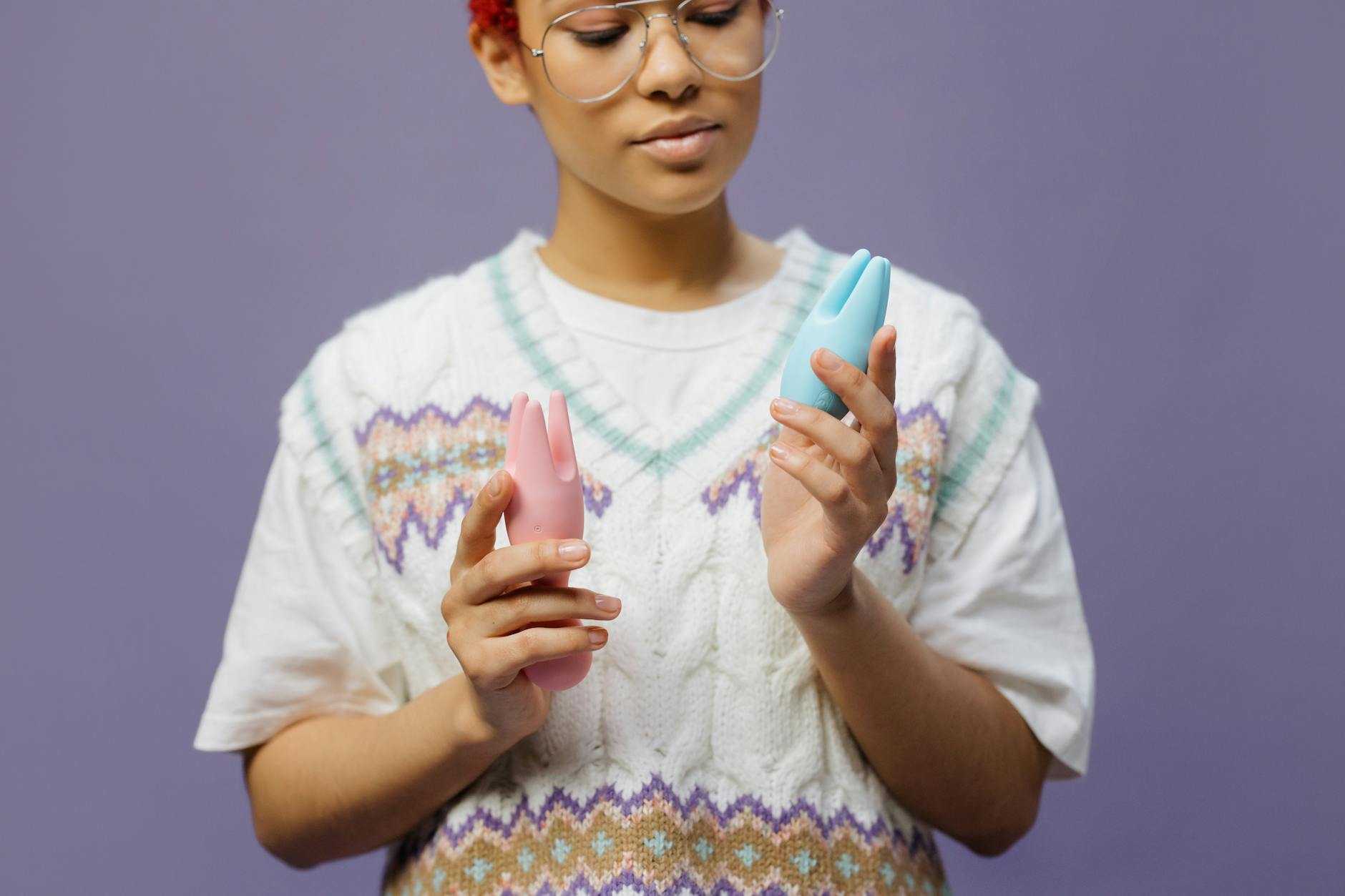
This is where a Lem vibrator enters the conversation. Not instead of your partner. Alongside them. Not as a replacement for intimacy, but as a way to honor your own needs without waiting for your partner's.
Solo pleasure without the guilt trip
A lot of higher-desire partners feel weird about using a vibrator when their partner has low libido. It can feel like admitting defeat, or like you're settling. You're not.
Using a lemon clitoral vibrator solo is not a workaround. It's a direct acknowledgment that your pleasure matters independent of partnered sex. And that's actually deeply intimate. It means you're responsible for your own satisfaction instead of making your partner responsible for it.
Start small. When your partner isn't in the mood and you are, give yourself permission to use a Lem for 20 minutes instead of pushing for partnered sex. Notice how you feel afterward. Most people report less frustration, better sleep, and easier communication the next day.
How to introduce it to your partner (without making it weird)
This conversation matters. You're not saying "I'm going to pleasure myself because you won't."
You're saying something closer to: "I need sex more often than you do, and I don't want that to become a source of pressure between us. I'm going to take care of that need solo sometimes, with a vibrator. That way you never have to feel obligated, and I'm not carrying around resentment."
Most lower-desire partners actually feel relief hearing this. It removes the guilt. It means they're not failing you by having lower libido.
Some partners are curious and want to be part of it. Some prefer to leave the room. Both are fine. The key is that you're not waiting for permission. You're informing them that you're taking care of yourself.
When partnered sex happens, make it count
Once you're not desperate for it, partnered sex often improves. You show up less needy. Your partner shows up less defensive. And you can actually focus on connection instead of checking off a box.
If your partner does initiate, pay attention. Use all the things you've learned about your own body from solo time. Guide them. Go slower. Build longer. The Lem Vibrator can even be part of partnered sex. Some partners love integrating it. Others don't. That's something you explore together when the pressure is off.
The point is that now you're choosing partnered sex because you both want it, not because one of you is desperate and the other is obliging.
The frequency question that actually matters
You might be having partnered sex once a week and solo sex twice a week. Or partnered sex every two weeks and solo sex in between. Or any combination. The exact breakdown doesn't matter.
What matters is that both of you feel satisfied and nobody feels used or pressured. That's the actual goal. Not reaching some ideal frequency that works for both of you equally. That rarely exists.
When you stop waiting for your partner's libido to match yours, you paradoxically become less resentful about the mismatch. You're taking care of yourself. Your partner isn't responsible for your sexual satisfaction anymore. They're just responsible for showing up enthusiastically when you're together.
What if your partner feels threatened
Some partners worry that if you use a vibrator solo, you'll want them less. That's a real concern for some people, and it deserves a straight answer: no. Research consistently shows that people who use vibrators in their solo play are more, not less, interested in partnered sex. You're not replacing them. You're taking care of a need they can't fully meet.
But your partner's insecurity is worth hearing. Don't dismiss it. Tell them: "This isn't about you. This is about me managing my own needs so I can show up better for us."
If they're still struggling with it after that conversation, that might be worth exploring with a couples therapist. But most of the time, this framing helps.
The long-term shift
What changes over months and years isn't the frequency mismatch. It probably stays. What changes is that you stop treating it like a failure.
You're not waiting for your partner to want more. They're not feeling guilty for wanting less. You've built a sustainable rhythm where both of you feel good about your own sexuality.
A lemon clitoral vibrator becomes just another tool in that toolkit. Some weeks you use it once. Some weeks you use it three times. Some weeks you don't use it at all because partnered sex is happening more. None of that is a referendum on your relationship.
It's just honest management of the fact that two people are never going to want sex at exactly the same frequency. And that's okay.
Why air-suction vibrators specifically help with this
A Lem vibrator feels different from other vibrators because it uses suction instead of vibration. That difference matters for this situation.
Suction stimulation builds arousal gradually. It doesn't feel performative. You're not powering through to an orgasm quickly so you can get on with your day. You're settling into pleasure, which changes the whole experience.
That slower, deeper stimulation also makes partnered sex feel more connected when it happens. You're used to your own body's rhythm instead of always adjusting to a partner's pace.
A final reality check
This isn't a perfect solution. You might still sometimes feel rejected when your partner isn't in the mood. They might still sometimes feel pressure around your higher libido. That's human.
But you're no longer pretending the mismatch doesn't exist or trying to force it away. You're managing it with honesty and tools that actually work. And that's genuinely sustainable.
People also ask
Can I use a Lem vibrator during partnered sex if my partner has low libido?
Absolutely. Some partners love it because it means they don't have to provide as much direct stimulation. Others prefer to stay out of it. If your partner is interested, integration can actually make partnered sex work better for both of you. The Lem vibrator does the work you might normally expect them to do solo, freeing them to focus on other forms of intimacy. Just make sure you're asking, not assuming.
Does using a vibrator make me less interested in my partner?
No. In fact, research on vibrator use shows the opposite. People who use vibrators tend to have more interest in partnered sex, not less. A lemon clitoral vibrator isn't replacing your partner. It's managing a sexual need that your partner can't fully meet, which paradoxically makes it easier to want partnered sex when it does happen.
What if my partner feels insecure about me using a vibrator?
That insecurity is worth taking seriously, but not at the expense of your own pleasure. Have a direct conversation: "This isn't about you. This is about me taking care of my own needs so I can feel less frustrated in our relationship." If they're struggling after that, couples therapy can help them work through the insecurity. But you shouldn't sacrifice your pleasure to manage their anxiety.
How often should I use a Lem vibrator if my partner has low libido?
As often as you need to. If you're someone with high libido and your partner is lower-desire, using a lemon sexual toy 2-3 times a week might be the right rhythm for you. Or it might be once a week. Or every other day. The point is that you're managing your own sexual satisfaction instead of waiting for your partner to meet that need.
Will my partner ever want more sex if I'm using a vibrator?
Maybe, maybe not. And that shouldn't be your motivation. Mismatched libido is usually about baseline desire, hormones, stress, and personality. It's not something vibrators fix. What vibrators do is manage the tension between different desire levels so you both feel better in the relationship.
Is it normal to have this much of a libido mismatch?
Completely normal. Research suggests that libido mismatches affect up to 45 percent of couples at some point. It's one of the most common relationship challenges, which means you're not weird or broken. You're just managing a totally standard relationship problem.
Want to explore how to navigate these conversations? Reach out at /contact to discuss your specific situation. Relationship coaching can help you and your partner build a sustainable rhythm around desire that works for both of you.