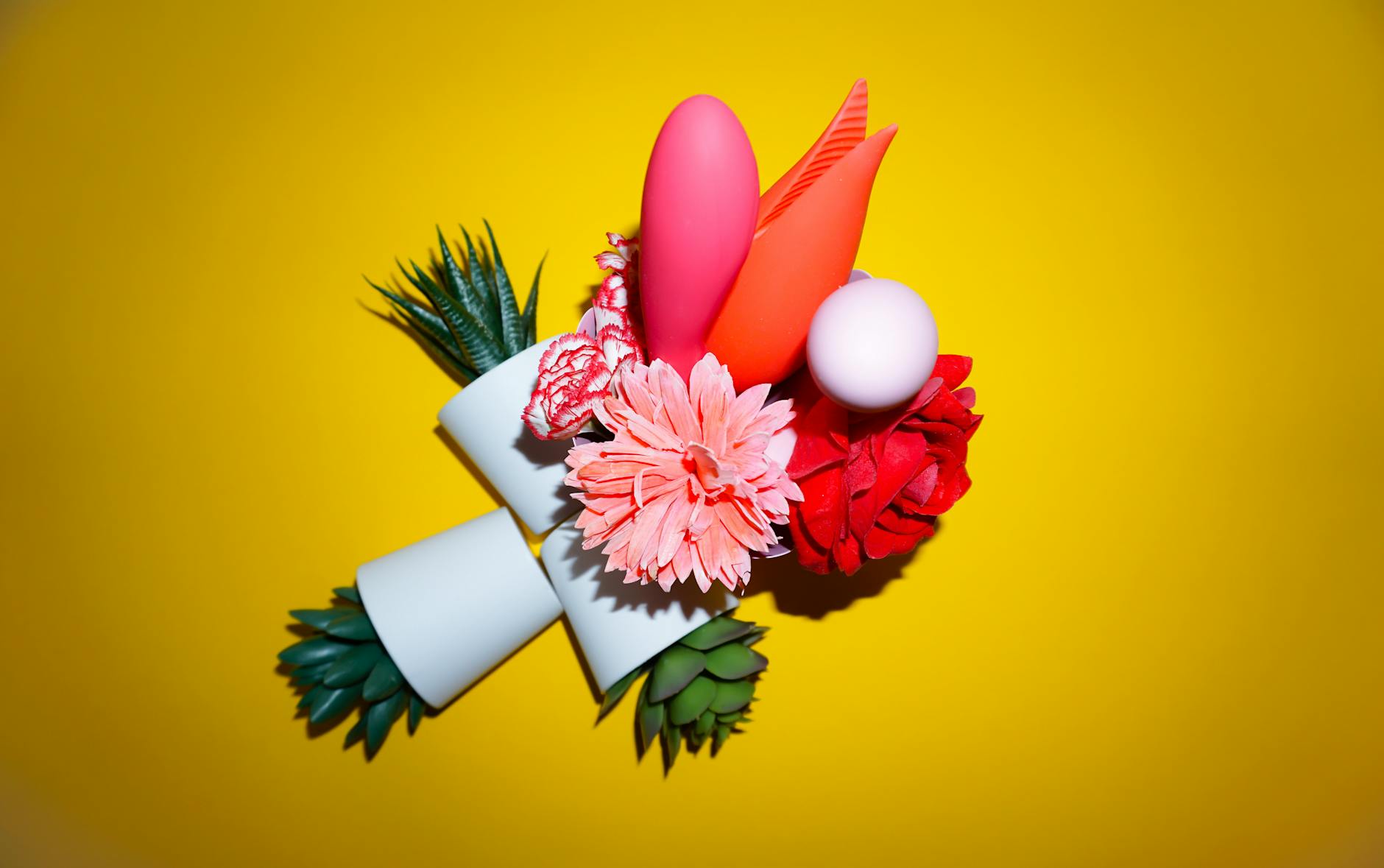
How to Use a Lemon Vibrator During Menopause When Everything Feels Different
Let's be real: menopause changes the sensation game. Tissue thins, lubrication shifts, and arousal doesn't fire up the same way it used to. But here's what nobody tells you clearly enough. These changes don't mean pleasure stops. They mean it needs a different approach.
That's where a lemon vibrator comes in. The design of a clitoral vibrator like the Lem works particularly well during this phase of life because it doesn't rely on the intense friction that can feel uncomfortable on thinner tissue. Instead, the suction mechanism stimulates without pressure. For people navigating menopause, that distinction matters.
What actually happens to pleasure during menopause
When estrogen drops, your vulvar tissue gets thinner and less elastic. Blood flow to the genitals can take longer to increase. The pelvic floor loses some of its support system. Your body produces less natural lubrication. These aren't bugs. They're real physiological facts.
But here's the part that gets lost in translation. The neural pathways for pleasure? Still there. The clitoral nerve density? Unchanged. Your brain's capacity to experience orgasm? Undiminished. Many of my clients report their most intense orgasms come after menopause, not before.
The gap between what your body can do and what it feels like it should do creates friction. Adding the right tool—and the right knowledge about how to use it—closes that gap fast.
Why lemon vibrators work better during menopause
Most traditional vibrators rely on internal or direct surface vibration. That works fine when tissue is thick and well-lubricated. During and after menopause, that same intensity can feel sharp, raw, or even numb.
A lemon clitoral vibrator uses air-pulse suction technology. It gently envelops the clitoris and pulses rather than vibrates. This approach has three advantages during menopause.
First, suction stimulates deeper nerve endings without the mechanical friction that can irritate thinning tissue. You get intense sensation without discomfort. Second, the graduated intensity levels let you start low and build gradually, which matters because arousal takes longer to develop post-menopause. Third, the design creates a gentle seal, so external sensitivity isn't the limiting factor.
The warm-up window expands
Before menopause, your body might have responded to stimulation in five to ten minutes. During and after menopause, budget fifteen to twenty-five minutes for arousal to build naturally.
This isn't failure. It's just how the blood flow and neural response works when estrogen is lower. Start with external touch, non-sexual massage, or even just time with your partner before bringing in a lemon vibrator. Use the first ten minutes to activate arousal through whatever turns you on. Conversation, touch, fantasy, looking at something you enjoy.
Then introduce your vibrator on the lowest setting. The Lem's pattern-one setting is soft enough that you can use it for another five to ten minutes while arousal builds. This gradual approach retrains your nervous system to trust the sensation and actually enjoy it, rather than chasing an intensity that never lands.
Lubrication becomes your baseline
I can't overstate this. Water-based lubricant stops being optional during menopause. It becomes part of the ritual, like brushing your teeth.
Your body still produces some lubrication, but less and slower. Even if it feels adequate, adding lube improves sensation because it reduces friction between the vibrator and your skin. It also signals to your brain that something pleasurable is about to happen, which triggers the rest of the arousal cascade.
Use a generous amount—more than you think you need. Reapply every few minutes if you're taking longer to build arousal. Water-based lubes are compatible with all silicone vibrators, including the Lem, so you can experiment freely.
Silicone-based lubes feel richer and last longer, but they can degrade silicone toys over time. Stick with water-based and you'll have zero complications.
The intensity arc changes
During menopause, the intensity curve flattens for many people. That means the jump from pattern one to pattern three feels much bigger than it used to.
Start at the lowest setting and spend five minutes there. Your tissue is re-sensitizing to stimulation, and your brain needs time to register pleasure. Then move to pattern two. Stay there for another five to ten minutes. Only then move to pattern three or four if that's where you want to go.
Here's the nuance: sometimes pattern two is enough. Sometimes the sweet spot is patterns one and two, cycling between them. There's no rush to chase intensity. Pleasure during menopause often comes from sustained, gentle stimulation rather than peak intensity. Let that be enough.
Partner communication shifts during this phase
If you have a partner, this is a good moment to talk about what's changing. Not in a clinical "my hormones are shifting" way, but in a "I want to explore what feels good to me right now" way.
Many partners worry that needing more warm-up time or lubrication means something has changed in the relationship. It hasn't. What's changed is your physiology, not your capacity for pleasure or connection.
Using a lemon clitoral vibrator together can actually deepen intimacy because it removes the pressure to "perform" arousal in real time. Your partner can apply lube, guide the vibrator, or simply be present while you explore what works. That's connection, not replacement.
If you're solo, a vibrator is pure autonomy. You get to figure out exactly what your body needs without anyone else's timeline or expectations in the mix.
When sensation feels numb or flat
Some people notice that even with the right vibrator and plenty of time, sensation feels muted during menopause. Desensitization is real, and it usually means one of three things.
You might need more warm-up. Some people's tissue needs thirty minutes of arousal before the nervous system fully activates. You might need more lubrication than you're using. More than you think is possible, honestly. Or you might have vaginal atrophy that's severe enough to benefit from topical estrogen cream. That's not shameful or rare. A menopause-informed gynecologist can prescribe it, and it works within weeks.
The other factor nobody talks about: your mental state. Stress, anxiety, relationship tension, or grief all suppress arousal during menopause more than they do before. If your body feels numb, ask yourself what's happening in the rest of your life right now. Sometimes the answer isn't physiological. Sometimes you just need to address what's actually weighing on you.
Pelvic floor tension during menopause
Lower estrogen makes the pelvic floor tighter and less flexible. That tension can make sensation feel uncomfortable rather than pleasurable. It can also make it harder to orgasm because the muscles can't release fully.
Before using your lemon vibrator, spend a few minutes consciously relaxing your pelvic floor. Breathe deeply. Imagine the muscles softening and widening. You can even press gently on the perineum (the area between your anus and vulva) to signal relaxation.
As you use the vibrator, keep breathing deeply. Many people hold their breath during arousal, which keeps the pelvic floor tight. You might notice that you reach orgasm more easily when you're actively breathing and consciously relaxing those muscles.
If pelvic floor tension is a persistent issue, pelvic floor physical therapy with a menopause-aware therapist can help. But you can start addressing it on your own, right now, during your next session with a lemon vibrator.
Pleasure after menopause often gets better
Here's the thing I see in my practice constantly: people who've made it through menopause and figured out what works often report that their orgasms are more intense, more frequent, or more satisfying than they were in their twenties or thirties.
Why? Partly because the cognitive load of fertility anxiety lifts. Partly because cultural pressure to be performing relaxes. Partly because you actually know what you want and aren't afraid to ask for it.
A lemon vibrator becomes less of a solution to a problem and more of a tool for pleasure you'd want anyway. The adjustment period—the part where everything feels different and uncertain—is temporary. What comes after can be genuinely excellent.
Questions people ask about vibrators and menopause
How long should I wait after menopause starts to use a vibrator?
You can use a vibrator during menopause whenever you want. There's no waiting period. If you're in early or mid-menopause, a lemon clitoral vibrator might feel better than your old vibrator because the suction technology is gentler on changing tissue. Start whenever feels right for you.
Will using a vibrator make my tissue thin faster?
No. Using a vibrator with appropriate lubrication doesn't damage or accelerate thinning. In fact, increased blood flow to the area—which arousal and vibrator use create—can support tissue health. The thinning is caused by lower estrogen, not by stimulation.
Can I use a lemon vibrator if I'm on hormone replacement therapy?
Absolutely. HRT changes your hormonal environment, but it doesn't change how a vibrator works. You might notice that as your estrogen levels stabilize on HRT, arousal and sensation return faster. That's a good sign that the therapy is working.
Should I use the lemon vibrator more or less often during menopause?
There's no "should." Use it as often as feels good to you. For some people, regular use (a few times a week) helps maintain tissue health and sensitivity. For others, that feels like pressure. The best frequency is whatever you actually want, not what you think you're supposed to do.
What if my partner wants to use the lemon vibrator with me and I'm nervous?
That nervousness is normal. You might feel self-conscious about needing more time or lube. You might worry that bringing in a tool means something is wrong. None of that is true. A vibrator is just a tool, like massage oil or a pillow. Using one together is just another way to explore pleasure as a team.
Do lemon vibrators feel different during different phases of the menopause cycle?
Yes. In early menopause, when hormones are still fluctuating, you might notice that sensation changes week to week. As menopause stabilizes, sensation becomes more consistent. This is normal. It's just your body adjusting to the new hormonal baseline.
Your next step
If you're navigating menopause and pleasure feels complicated, you're not alone. Thousands of people are in the exact same position right now, figuring out what works for their changing body.
A lemon vibrator is a small tool that can make a big difference, but only if you use it with the right setup: patience with warm-up time, lubrication, graduated intensity, and honest communication with yourself or your partner about what actually feels good.
If you're still uncertain about what approach will work best for your specific situation, reach out. We're here to help you figure it out.