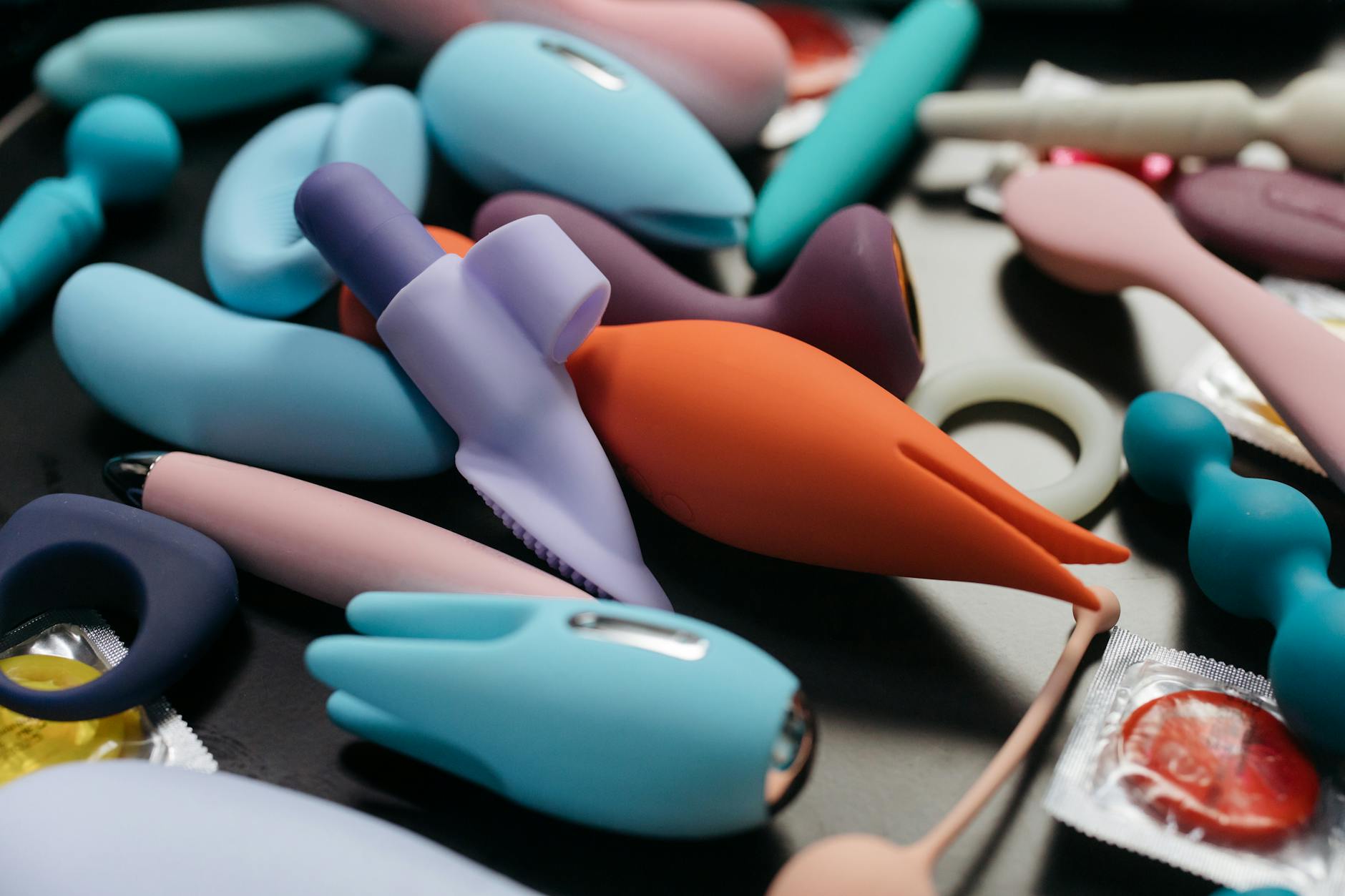
Here's what nobody tells couples about vibrators
You think adding a clitoral vibrator to sex with a partner means more work, more choreography, more pressure to "do it right." Actually, it's the opposite. A lemon vibrator or other clitoral toy is the fastest way to dissolve performance anxiety in a partnership. Let me explain why.
Why performance pressure kills pleasure
Most couples fall into one of two patterns. Either one partner is waiting for the other to orgasm (and the waiting makes it impossible), or one partner feels like their job is to produce that orgasm (and the pressure makes them tense). Both patterns turn sex into a task instead of a conversation.
Here's what happens neurologically. When you're focused on achieving something, your parasympathetic nervous system (the one that drives arousal) steps back. Your sympathetic nervous system (fight or flight) takes over. Cortisol rises. Pleasure gets harder. The more you try, the worse it gets.
A lemon vibrator breaks that loop because it outsources the "job" part. The device handles intensity and consistency. You handle intimacy and presence. Suddenly you're not performing. You're connecting.
The permission shift
Honestly, the biggest shift I see when couples start using a lemon vibrator together is psychological, not physical. The person receiving stops feeling like they need to come quickly to "let their partner off the hook." The person giving stops feeling like they're failing if orgasm isn't happening from penetration or manual stimulation alone.
Using a clitoral vibrator together gives you both permission to slow down. It removes the unspoken scorekeeping. "Did I make them come? Did they appreciate my effort? Am I doing this right?"
When you're using a lemon sexual toy together, the question becomes simpler. "Is this feeling good? Do you want more, less, or different?"
How to introduce it without awkwardness
Timing matters. You don't want to introduce a clitoral vibrator mid-sex if you haven't talked about it first. That's defensive surprise, not sexy surprise.
Instead, bring it up outside the bedroom. Neutral territory. Neutral energy. "I've been thinking about us trying something that might take pressure off during sex. Have you ever thought about using a vibrator together?" That's the whole script. No buildup, no apology.
Some partners will say yes immediately. Some will ask questions. Some will need time. None of those responses is wrong. If your partner hesitates, the instinct is to defend or convince. Don't. Ask what the hesitation is. Usually it's one of three things.
"I feel like I'm not enough." Reframe: "I want more for us. Not instead of you. With you. It's a different kind of pleasure, not a replacement."
"I don't know how to use it." Easy. You can figure it out together. No instruction manual pressure. Show them how it feels on your hand first. Let them hold it. Normalize it before it's in motion.
"It feels weird." Fair. Give it a specific number of times to try (three or four). Weirdness fades once you've done it twice. Then decide together if you want to keep going.
Where to position yourself
The mechanics matter more than you'd think. If you're both focused on the device, you miss each other. The goal is to use the vibrator as a tool for intimacy, not as a replacement for it.
Position one: side by side. One person uses the lemon vibrator while the other person is receiving. This lets you make eye contact, touch each other's faces, kiss. The person holding the lemon clitoral vibrator has their hands free for everything else (stroking hair, holding the other person close, exploring). This is the setup that feels most like sex with an assistant, not sex with a machine.
Position two: the giver behind or beside. This lets you stimulate with the vibrator while your other hand roams (breasts, belly, thighs, whatever feels right). It also keeps you engaged with the whole body, not just the vulva.
Position three: the receiver holds the lemon vibrator themselves. This is underrated. When the person receiving controls the vibrator, they control intensity, pattern, and pace. The partner providing penetration or manual touch can focus on building connection instead of managing stimulation. It's collaborative instead of hierarchical.
The rhythm of it
Don't assume that a lemon vibrator means fast and intense. Some of the best uses are actually the opposite. Start low. This takes longer, yes, but it's actually less pressure because there's no rush.
Try this rhythm. Start with the vibrator on a low pattern before penetration or manual touch begins. Give the person receiving 2-3 minutes to warm up. Then add other stimulation in layers. Penetration, or fingers, or stroking, while the vibrator keeps steady underneath. Don't increase intensity. Just add dimensions.
The weirdest thing that happens at first is that people think they need to coordinate everything. Vibrator on, then thrust, then kiss, then adjust. In reality, the best feeling is when the vibrator stays consistent and everything else flows around it. Let the clitoral vibrator be the metronome. Let everything else be improvisation.
What to do if something feels off
If the person receiving feels numb, that's usually a sign of speed, not sensation. Drop the vibrator intensity and add manual touch. Slower hands on skin often wakes the nervous system up better than faster vibration.
If the person receiving feels disconnected or distant, pause. Check in. Sometimes a vibrator paradoxically creates distance if one partner is anxious about whether it's working. The solution is a break, some kissing, a reminder that this is about the two of you, not about orgasm.
If the person giving feels left out, the positioning is wrong. Go back to side by side or behind, where you have more to do than just hold the lemon vibrator. Your role isn't to be a toy operator. It's to be present.
If you're both holding back because something feels awkward or wrong, stop and ask why. "That didn't feel right. Let's try something else." You're not failing. You're learning what works for your bodies and your dynamic together.
When to bring it into foreplay versus main event
Early on, I'd suggest using a lemon sexual toy during foreplay, not as the main event. This gives you both space to experiment without pressure. You can try it, see how it feels, talk about it after. Then decide if you want it to stay part of your routine or if you want to move forward without it next time.
Once it becomes familiar, some couples use it in the beginning. Some in the middle. Some couples find that a clitoral vibrator is perfect during foreplay but they want to switch to manual touch once they're really connected. That's all fine. The beauty of having a lemon vibrator available is that you can use it when it serves pleasure, and skip it when you don't need it.
The goal isn't more pleasure. The goal is shared pleasure. Those are different things.
Questions that matter after
After you use a lemon vibrator together, don't just roll over and sleep. Take two minutes to ask three things.
"How did that feel?" Real answer only. Not the answer you think your partner wants.
"What did you like?" Be specific. Not "it was good." But "I liked how relaxed you were" or "I liked using it together instead of alone." This cements what's working.
"What would you change next time?" Not criticism. Curiosity. This normalizes iteration instead of making sex a pass/fail.
These three questions turn a vibrator from a novelty into a tool for understanding each other better.
Common questions couples ask
Does using a vibrator together mean my partner isn't satisfying me?
Nope. It means you're adding a dimension to what already works. I compare it to cooking. You can make an excellent dish with just salt and heat. Adding acid and fat doesn't mean salt was failing. It means you're building layers. A lemon vibrator adds a layer. The rest of what you do together is still foundational.
How often should we use it?
As often as it feels good, which might be every time or once a month. There's no rule. Some couples use a lemon clitoral vibrator because it solves a specific problem (pressure, numbness, time constraints). Some use it because they just like how it feels. Both are valid. Track what works for your rhythm, not someone else's.
Will using a vibrator change what we like?
It might change what you discover you like, which is different. You might learn that you enjoy a certain pattern of vibration, or that you prefer a specific position when using it. That's not the vibrator "changing" you. That's you learning your body better. Which helps everyone.
What if I'm embarrassed?
Embarrassment is normal. It usually fades after the first time. If it doesn't, that might be a sign that you and your partner need to talk about intimacy more broadly, not just about the vibrator. A marriage and family therapist can help with that conversation. Shame isn't something a toy fixes. Connection work does.
Can I use a lemon vibrator by myself and with a partner?
Completely. In fact, it's ideal. When you know how a clitoral vibrator feels on your own, you're less dependent on your partner's technique when you use it together. You know what you like. You can direct. You're not learning at the same time you're trying to be vulnerable. Solo exploration actually makes partnered use easier.
What if my partner wants to use it but I don't?
You don't have to. But I'd ask why. Is it disgust? Insecurity? Genuinely not interested? Those are different conversations. If it's insecurity, then yes, you should probably talk with a therapist together. If it's genuinely not your thing, your partner using a lemon vibrator solo is still good for your sex life together. You can be present, you can help, you just don't have to experience it exactly the same way.
The long view
Couples who use clitoral vibrators together tend to report one surprising change. Sex becomes less like a performance and more like play. There's less scorekeeping. Less anxiety. More conversation. More laughter sometimes. That shift is worth way more than any orgasm.
The lemon vibrator isn't fixing anything broken. It's removing unnecessary pressure so the good parts of your connection can show up more clearly. That's it. That's the whole thing.
If you're thinking about trying this with your partner and you're nervous, that's normal. Start small. Talk first. Remember that discomfort with new things is different from incompatibility. You might discover that a lemon sexual toy becomes part of your routine. You might try it once and go back to what you were doing before. Either way, you tried something together. You communicated. You showed up. That matters more than the toy.