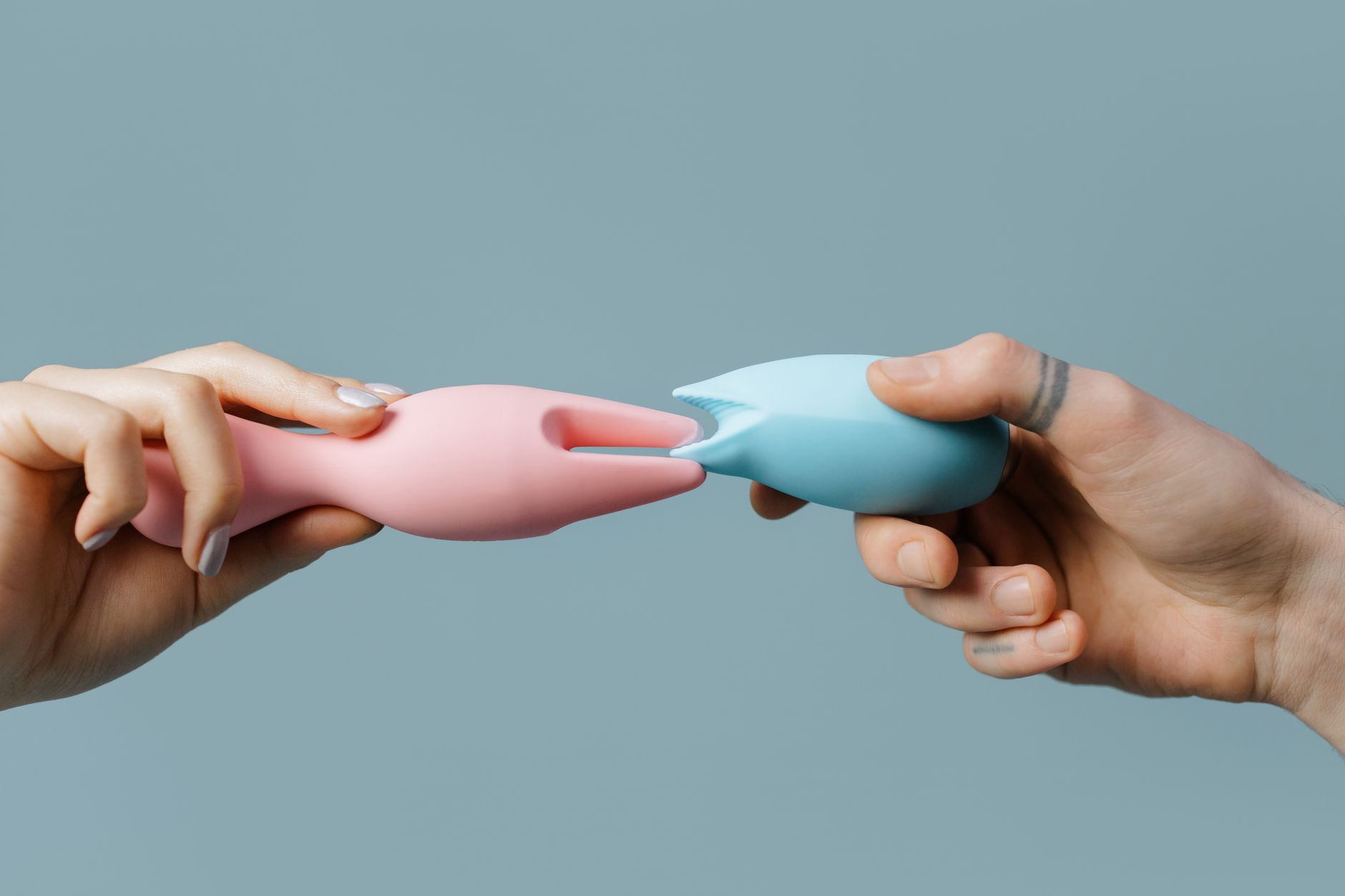
Let's talk about the sensation that kills the mood
Here's the thing nobody warns you about: sometimes the physical sensation of penetration becomes overwhelming not because something is wrong with you, but because your nervous system is picking up on textures, friction patterns, or internal pressure in a way that registers as distracting rather than pleasurable. It's not pain. It's not numbness. It's a kind of heightened awareness that turns what should feel good into something you're bracing against instead of leaning into.
For many people, this happens because the internal tissue is genuinely more sensitive than it used to be, or because past experiences have taught the pelvic floor to tighten protectively. The result is the same: penetration becomes something to get through rather than something to enjoy. And when you're with a partner who wants that connection, the gap between what they want and what your body can comfortably offer creates friction of a different kind.
Here's what I see work consistently in my practice: shifting the primary source of stimulation to the clitoris, where you have more control and where sensation typically feels cleaner and more pleasurable. A lemon clitoral vibrator isn't a workaround. It's often the doorway back to genuine pleasure, both alone and with a partner.
Why external focus changes everything when internal texture feels overwhelming
Your clitoris has roughly 8,000 nerve endings in a space the size of a pea. Your vaginal interior, by contrast, has far fewer specialized nerve endings and is much more sensitive to texture, pressure, and repetitive friction. When internal sensations feel overwhelming, that's often your body giving you reliable feedback: this particular input is too much right now.
The lemon sucker design matters here specifically. Air-suction stimulation focuses purely on the clitoral body and glans, where sensation is concentrated and controllable. You're not managing competing signals from penetration at the same time. You're not bracing your pelvic floor. You're simply receiving pleasure from the one place designed to receive it most directly.
This isn't avoiding penetration. It's creating a conditions where penetration becomes optional rather than mandatory, which almost always makes it more enjoyable when you do choose it.
The setup that actually works with a partner
Let's say you and your partner want to stay connected during penetration, but internal texture sensitivity is making that difficult. Here's the framework I recommend:
Start with external focus only. Use your lemon vibrator for your primary pleasure during foreplay and early arousal. Let your partner engage with you externally, or use the toy together. This isn't the warm-up to "real" sex. This is the main event for now.
Establish arousal separately from penetration. Once you're genuinely turned on and your pelvic floor is relaxed (not tensed in anticipation), introduce the idea of penetration. But here's the key: your partner enters slowly while the lemon vibrator continues on your clitoris. You're not switching modes. You're layering.
This approach does two things. First, it keeps your nervous system in pleasure mode rather than alert mode. Second, it gives you control over the pace and depth of penetration because you're focused on something else. Your partner can slow down if they feel you tensing, and you can communicate about what depth feels manageable.
Use patterns and intensity to stay present. Air-suction vibrators like the Lem offer multiple intensity levels. Start at a lower pattern (1 or 2) and increase as your arousal deepens. If you feel internal texture sensations becoming distracting, increase the external stimulation. Your brain can only process so much input at once, and prioritizing clitoral pleasure will quiet the noise from elsewhere.
What textured sensation actually means about your nervous system
I want to be direct here: textured internal sensation often isn't a physical problem. It's a nervous system adaptation. Your pelvic floor muscles may be holding tension protectively. Your vaginal tissue might be responding to past friction or pressure by becoming hyperaware. Or your brain might be sorting sensation into the "alert" category instead of the "pleasure" category.
None of this is fixable through willpower or by pushing through. But it's genuinely addressable through nervous system regulation. When you shift to clitoral focus, you're not avoiding the issue. You're creating conditions where your nervous system can relax enough to recalibrate.
Many clients report that after several weeks of using a lemon vibrator during partnered sex with this layered approach, internal sensations gradually feel less distracting. Your brain learns that penetration and pleasure can coexist. Your pelvic floor stops bracing. The texture awareness softens into the background.
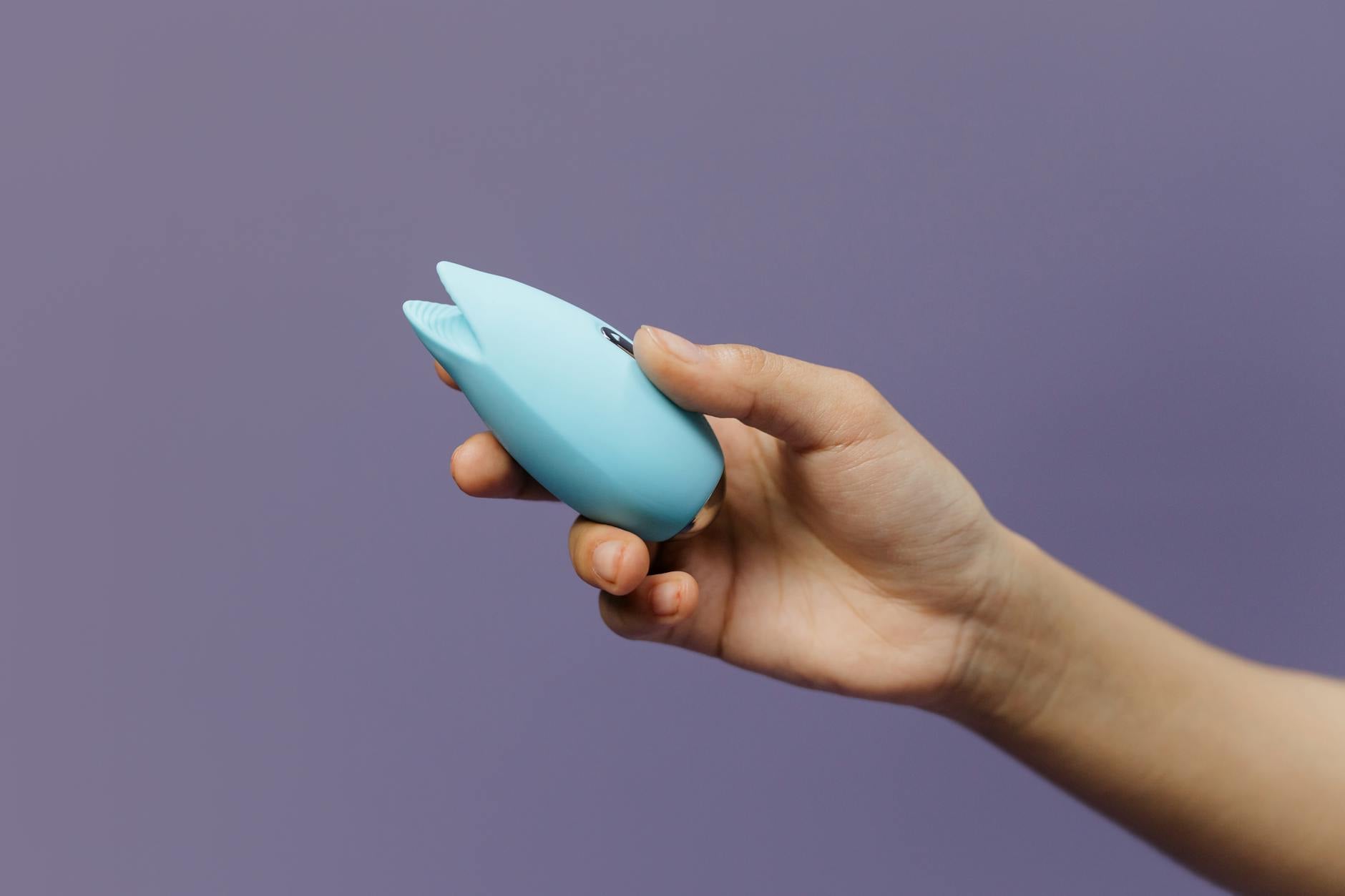
Photo by cottonbro studio on Pexels
Communicating about this with your partner without creating distance
One of the hardest conversations couples have is: "I need us to do this differently because my body needs it." The fear, often unspoken, is that your partner will hear it as rejection. That it means you don't want them. That penetration should just work because it's supposed to.
Here's how I frame it in my practice: you're not asking your partner to do less. You're asking them to join you in a different way. A lemon clitoral vibrator isn't a replacement for your partner's involvement. It's an invitation to stay connected while removing a source of distraction.
When you approach this conversation, lead with what you want, not what you're avoiding. "I've noticed that when we focus on my clitoris first and keep using the vibrator during penetration, I feel way more present and turned on" is wildly different from "Penetration feels weird to me right now."
Most partners respond well to this because they get to stay involved, and they get to experience you actually enjoying what's happening instead of managing it. That's genuinely better for both people.
Solo exploration first, partnership second
If you're not currently with a partner, or if you're early in figuring this out, start solo. The information you'll gather about your own nervous system is invaluable.
Use your lemon vibrator in a relaxed setting where you have zero pressure to achieve anything. Notice which intensity levels feel good. Notice whether your pelvic floor relaxes or tightens. Notice whether your attention can stay on pleasure or whether it keeps drifting to body monitoring.
Then, when you do involve a partner, you'll already know what works. You won't be discovering yourself at the same time you're managing someone else's expectations. That's a lot of cognitive load, and it almost always kills arousal.
Many people find that a few weeks of solo exploration with a lemon vibrator completely shifts their relationship to internal sensation. The awareness that felt overwhelming becomes manageable. The tension that felt automatic starts to release. By the time you bring a partner in, you're leading from a place of knowing what pleasure actually feels like for you, not from a place of managing discomfort.
Positions and depths that reduce internal texture sensitivity
If you do move toward partnered penetration with internal texture sensitivity, position matters. Here's what works:
Shallow penetration positions. Any position where your partner stays relatively still and shallow (rather than thrusting deeply) reduces the amount of internal friction and pressure. Positions like seated face-to-face, or spooning from behind, naturally limit depth and give you more control.
Positions where you control motion. If you're on top or in a position where you're moving rather than receiving movement, you can dial the speed and depth to what feels manageable. This also lets you focus on clitoral stimulation with your lemon vibrator simultaneously.
Positions that allow you to stay present. Face-to-face connection, where you can make eye contact and communicate in real time, is always better than positions where you can't see your partner. Internal texture sensitivity often comes from dissociation or nervous system alertness. Staying visually connected helps ground you.
If a position starts to feel overwhelming, you have every right to pause and switch. Your comfort and presence matter more than sticking with any particular setup.
When textured sensation might signal something medical
I want to flag this clearly: if internal texture sensations are new, or if they're accompanied by pain, bleeding, or discharge, that's a conversation for a gynecologist, not just a relationship coach. Conditions like vulvodynia, pelvic floor tension, or infections can all create textured internal sensation, and they all benefit from proper medical assessment.
The strategies I'm describing here work beautifully for sensation overload and nervous system hyperawareness. But they're not a substitute for medical evaluation if something has shifted in your body.
The permission piece nobody talks about
Here's what I tell clients who feel like they should just be able to "handle" internal texture sensitivity: your body is not broken. You don't need to push through. A lemon vibrator is not a compromise. It's not a concession. It's a tool that lets you access pleasure on your terms.
The idea that "real" sex requires penetration, and that anything else is less-than, is the thing actually breaking the connection with your partner. Not your body. Not your nervous system. The narrative.
Once you release that, and once your partner releases that, everything shifts. Suddenly you're not managing a problem. You're exploring what actually feels good. And it almost always turns out that layering clitoral stimulation with optional penetration, rather than penetration with optional clitoral work, creates more pleasure, more presence, and more genuine connection than the other way around.
FAQ: Your textured sensation and pleasure questions
Can I use a lemon vibrator during penetration even if I don't have sensitivity issues?
Absolutely. Layering clitoral stimulation with penetration is genuinely more pleasurable for most people, regardless of whether internal texture feels overwhelming. You get concentrated sensation where you're most wired for pleasure, while also staying connected to your partner. It's not a workaround. It's just good design.
How long does it take for internal texture sensitivity to feel less distracting?
It varies, but most people report noticeable shifts within 2-3 weeks of consistent use. Your nervous system is learning that your partner and your vibrator aren't threats. That takes time, but it happens pretty predictably once you establish a pattern. Some people take longer, especially if there's trauma involved.
Do I need to tell my partner I'm using a lemon vibrator during sex, or can I keep it private?
If you're using it during partnered sex, your partner will definitely notice. If you're using it solo to figure out what works, that's your business. But if it's going to be part of your partnered experience, transparency is always better. The conversation might feel awkward for five minutes, but it beats your partner feeling confused or left out during sex.
What if my partner resists using a vibrator during sex?
This is usually about feeling replaced, not actually about the vibrator. Sometimes a conversation helps: "This helps me feel more pleasure, which means I'm more present with you." Sometimes showing them how it works, or inviting them to hold it, makes it less abstract and threatening. If resistance stays after a genuine conversation, that might point to other relationship patterns worth exploring.
Can textured internal sensations get worse if I keep focusing on clitoral pleasure?
No. In fact, the opposite tends to happen. As your clitoris becomes a reliable source of pleasure, your nervous system relaxes. That relaxation actually gives your body permission to enjoy internal sensation when you do choose it. You're not conditioning yourself away from penetration. You're creating the conditions where penetration can feel genuinely good instead of distracting.
Is internal texture sensitivity the same as vaginismus?
They can overlap, but they're different. Vaginismus is involuntary muscle tension that makes penetration difficult or impossible. Textured internal sensation is more about what something feels like rather than whether it's physically possible. That said, the nervous system relaxation that happens with clitoral focus helps both conditions.
The bottom line: your nervous system is smarter than you think
Textured internal sensation is your body's way of saying "this particular input is too much right now." It's not a flaw. It's feedback. And the feedback is telling you that shifting focus to your clitoris, where sensation is cleaner and more pleasurable, is going to serve you way better than pushing through.
A lemon vibrator isn't a workaround. It's a way of listening to what your body actually wants and building pleasure around that instead of against it. Once you do that, everything else gets easier. Your partner feels less pressure. You feel more pleasure. Your nervous system relaxes. And penetration, when you choose it, actually feels good instead of something to manage.
That's not settling. That's exactly how pleasure is supposed to work.
Have questions about how to navigate this in your specific relationship? Reach out at /contact and let's talk through what might work for you.