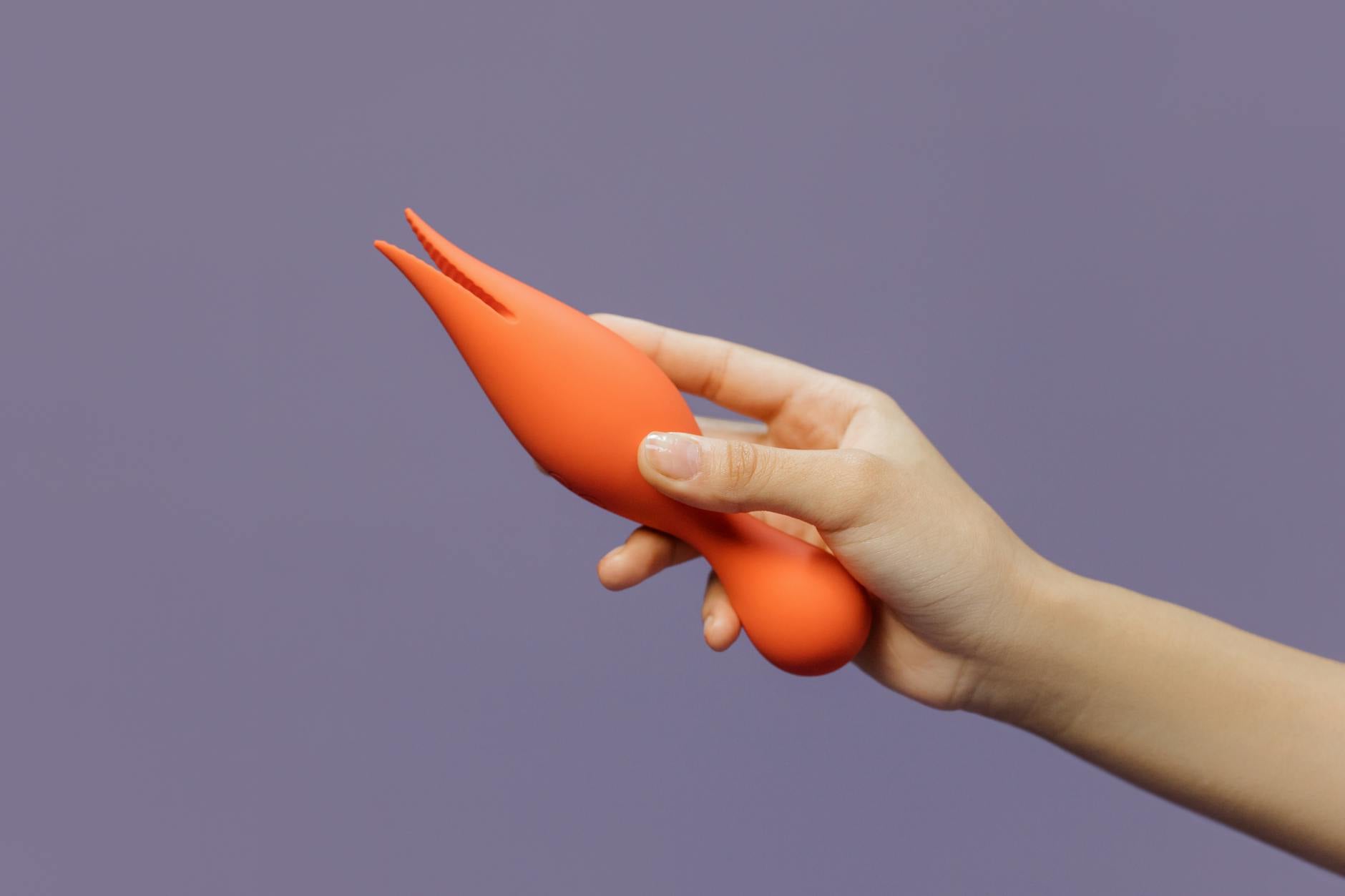
Here's the thing about overstimulation
You want an orgasm that actually moves you. Not a gentle ripple. A real, full-body response that leaves you breathless. And then the doubt kicks in: "If I go for that, will my clitoris go numb? Will I need a break? Will I hurt myself?"
Honestly, that fear makes sense. Your body has been through something if you're asking the question. Maybe you've used toys that left you feeling nothing for days. Maybe you've had partners who didn't understand the difference between intensity and pain. Maybe you've numbed out so many times that you're terrified to push past medium again.
Here's what I know after years of working with couples: stronger orgasms and safety aren't opposites. They're partners. The Lem vibrator's design actually makes this easier because suction-based stimulation works differently than traditional vibration. It's more about pull than pound. That changes everything.
Why your worry about overstimulation is valid
Let me separate the real from the myth. Temporary numbness after intense stimulation is normal. Your nerve endings get tired, just like muscles do after a workout. That usually resolves in 30 minutes to a few hours.
Permanent damage from toy use? Extremely rare, assuming you're using something body-safe and you're not going at it for five hours straight. But here's what does happen if you chase intensity without a strategy: desensitization. Your nervous system adapts to the stimulus. You need more next time. And more after that. Until you're chasing a high that keeps moving further away.
This isn't about the toy being "too strong." It's about overstimulation without recovery, which trains your body to need constant escalation. That's the actual trap.
Sensation mapping: the foundation
Before you even turn on a lemon vibrator, you need to know your own landscape. Not everyone's clitoris responds the same way to the same stimulus. Some people's clitorises prefer light, consistent pressure. Others want fast variation. Some people have a sensitive underside and a more resilient head. Some go numb easily around the corona.
Spend three to five solo sessions just exploring with your hands. No device yet. Notice:
- Where does light touch feel good?
- Where do you need more pressure to feel anything?
- Where does pressure shift from pleasurable to uncomfortable?
- Does sensitivity change throughout your cycle?
- Does any particular area make you tense up or pull away?
Write this down if it helps. Seriously. "Left side near edge is sensitive," "Head can take sustained pressure," "Right side needs breaks." This becomes your instruction manual.
Why the Lem vibrator changes the overstimulation game
Most traditional vibrators buzz. They move really fast in a small range, applying direct mechanical stimulation. It's efficient, but it's also easy to overdo because you feel like you're chasing a peak. Your body gets wound up. Then you either summit or you don't, and either way, you're exhausted.
The Lem uses a suction-pulse pattern. It creates a rhythmic seal-and-release sensation that engages a larger area of tissue at once, rather than buzzing a tiny point. This means you can usually go longer without numbness because you're distributing stimulation. The intensity builds differently. It feels more like a wave than a spike.
For people worried about overstimulation, that's huge. You get power without the sensation crashing hard on the other side.
The progression pattern that builds intensity safely
Here's the sequence I recommend to almost everyone:
Session 1-2: Explore the Lem on its lowest pattern (usually 1-3) without any pressure. Just let it hover. Get used to how it feels. This usually takes 10-15 minutes and is not about orgasm. It's about familiarity.
Session 3-4: Same low pattern, but now you're gently moving it slightly, finding the angle and spot that feels best. Still no pressure against your body. Most people discover they prefer a 45-degree angle or just barely making contact.
Session 5-6: Gentle contact at the lowest pattern. You're building up from here. This is where most people first feel real pleasure. Spend 20-30 minutes here before moving on.
Session 7-8: Gradually introduce medium patterns (usually 4-6). Don't skip straight to the top. Your nervous system needs the runway. If a pattern feels good, stay on it for at least 5-7 minutes before trying the next one.
Session 9+: You know your body now. You can mix patterns, vary pressure, take breaks intentionally. If you want an intense orgasm, you can build toward it knowing exactly when to ease off to avoid the crash.
This timeline assumes two to three sessions a week. If you're going daily, extend it longer. Your nervous system needs recovery time between intense sessions.
The pause-and-resume technique
Here's something counterintuitive: you can get stronger orgasms by stopping before you need to. I know that sounds backwards.
When you feel yourself climbing toward a peak, pull back. Not completely. Just ease off the intensity or pattern for 30 seconds to a minute. Your body recognizes that you're not crashing. Then reapply the same intensity. Your arousal rebuilds faster than it rose the first time, and the buildup creates a more intense response.
It's like a sprint workout. Short bursts with micro-recovery create more power than one long push.
With the Lem vibrator, you can do this by stepping down one or two pattern levels, or by adjusting angle slightly, or by just lightening pressure. You don't have to turn it off. The pause-and-resume trains your body to handle intensity without the numbing crash because you're giving your nerve endings brief rests.
Do this two to three times per session. After the third rebuild, let yourself summit. You'll often be surprised at the intensity because you've built it in layers.
Managing the sensitivity dip after orgasm
Here's what actually happens. You have an orgasm. For about 10-30 minutes after, depending on your neurology, that area feels too sensitive to touch. Some people describe it as almost painful. Others say it's just "done for a bit."
This is not damage. This is your nervous system saying "we just sent a lot of signal through here." It resolves on its own. The mistake is either pushing through it (which trains numbness) or believing it means something went wrong.
Instead, after an orgasm, just stop. Let your body cool down. If you're partnered, move to foreplay or intimacy that doesn't involve that area. In 15-20 minutes, sensitivity returns to normal. If you want another orgasm, you can often go again. If you don't, that's fine too.
The Lem's suction design actually makes this recovery faster than harsh vibration because you're not leaving your tissue inflamed.
When to slow down or seek help
There's a difference between normal sensitivity and actual pain or injury. If you feel sharp pain during or after toy use, stop. If numbness lasts longer than a few hours, stop. If you notice any bleeding or tears, that's a sign you've gone too hard or your tissue needs more lubrication or the angle is wrong.
Water-based lubricant is not optional. It's especially important if you're building intensity because it lets you sustain contact longer without friction damage. Reapply every 10 minutes or so.
If you're dealing with clitoral numbness that won't resolve, take a break entirely for a few days. Your nervous system needs to reset. That's not failure. That's you taking care of yourself.
The partner dimension
If you're using a lemon vibrator with a partner, you have an extra variable to manage: their comfort level with intensity and their awareness of when to back off.
The same pause-and-resume technique applies, but you need to communicate your sensations clearly. "That feels good, hold that pattern for another minute" is more useful than "harder" because your partner might interpret harder as faster, and that's not what you need.
Consider exploring intensity with a partner who prefers slower intimacy as a way to find middle ground. They learn that intensity doesn't mean rushed. You learn that you can have strong pleasure without losing connection.
Building your personal threshold
Stronger orgasms aren't about maximum power. They're about your nervous system learning to handle and sustain high arousal without crashing. That threshold is individual and it grows with practice and intention.
The Lem vibrator's range (usually 1-10 or similar pattern steps) is designed so you can find your actual sweet spot, which is often somewhere in the middle or upper-middle. Not the top. The top is for occasional moments, not regular use.
Once you know your threshold, you can play in that zone confidently. No worry about overstimulation because you're not chasing the absolute maximum. You're playing in the range where your body can sustain intensity, recover quickly, and do it again if you want.
That's where the best orgasms live. Not at the edge of what's possible. In the range where you feel powerful and safe.
Frequently asked questions
Can you get permanent numbness from a lemon vibrator?
Permanent nerve damage from toy use is exceptionally rare. What's much more common is temporary desensitization from overuse, which resolves completely with a break of a few days. If you notice numbness after a session, take 2-3 days off that area entirely. Your sensitivity returns. If it doesn't return after a week, talk to a gynecologist, but this is genuinely uncommon.
How long should you wait between intense sessions?
If you've had an intense orgasm or multiple orgasms, give yourself 24-48 hours before another intense session. Lighter solo exploration can happen more often, but when you're building toward strong sensation, recovery matters. Think of it like any other workout. Your nervous system is working hard.
Is it normal to need more intensity over time?
Yes, to a point. Your nervous system adapts to consistent stimulus, which is why a toy that felt amazing in week two might feel ordinary in week eight. This is not a sign that you need a stronger toy necessarily. It often means you need to vary your patterns, take breaks, or switch between toys. The Lem vibrator's multiple patterns help here. Switching between patterns keeps your body from fully adapting.
What's the difference between overstimulation and desensitization?
Overstimulation is the immediate sensation of too much, too fast. You feel it in the moment. Desensitization is what happens if you repeatedly overstimulate without breaks. Your nervous system stops responding as strongly. Prevention is way easier than recovery, so if something feels overwhelming in real time, back off immediately.
Can you use a lemon sucker toy every day?
You can use it daily on lower patterns for exploration and lighter pleasure. If you're chasing intense orgasms, I'd limit those to 2-3 times a week so your nervous system can recover. Many people find that spacing out intense sessions actually makes each one feel stronger because your body hasn't adapted.
Does lube help prevent overstimulation?
Yes. Lubrication reduces friction and allows you to sustain contact longer without tissue irritation. It also lets you use a clitoral vibrator or lemon vibrator for longer without that raw feeling. Always use water-based lube with silicone toys. Reapply every 10 minutes or so during longer sessions.
The bottom line
Stronger orgasms and overstimulation fear don't have to be a standoff. You get what you want by building gradually, learning your body's actual thresholds, and treating recovery as part of the process, not a failure.
The Lem vibrator is built for this because suction stimulation is naturally gentler on tissues than constant vibration, while still delivering real intensity. That means you can usually sustain longer sessions, take intentional pauses, and get the power you're after without the crash that used to scare you.
Start low. Map your sensation. Respect the pause-and-resume. Take your days off. Your pleasure is worth the strategy.