
Here's the truth about toys and partnership
Introducing a lemon clitoral vibrator into sex with a partner isn't weird, but the approach can be. Most of the awkwardness people feel comes from framing it as "something's missing" rather than "something new we can explore together." Small difference in words. Massive difference in outcome.
I've worked with hundreds of couples over the years, and the ones who integrate toys most naturally are the ones who treat them like any other form of communication between bodies. Not a rescue tool. Not a performance enhancer. Just another way to know each other.
Start the conversation before the bedroom
The worst place to introduce a lemon vibrator is mid-sex when someone's already self-conscious or focused on their own response. Pick a calm moment outside the bedroom. Maybe over coffee, maybe in the car, somewhere neutral where there's no physical pressure.
Here's what actually works as an opener: "I've been thinking about what would feel good for me, and I'm curious about trying [specific toy name]. I'm not saying anything's wrong with what we do now. I just think this could add something." That's honest. That's directional. That's not a referendum on your partner's skills.
If your partner seems hesitant, ask why. The answer usually isn't about the toy. It's about one of three fears: "Am I not enough?" or "Does this mean you're not satisfied with me?" or "Will I look stupid using it?" Address the actual fear, not the surface objection.
Most partners feel relieved, honestly. Permission to add pleasure without guilt is something a lot of people want but don't know how to ask for.
The positioning that actually works
If you have a vulva and you're the one using the lemon sucker or clitoral vibrator, you have real options for partnered play. You're not locked into one angle.
During penetration (if that's part of your routine). You or your partner can hold the lemon vibrator against your clitoris while they're inside you. The rhythm doesn't have to match. Most people find a slower penetration pairs best with medium vibration intensity. If you're on your back, your partner can use their hand to hold it steady. If you're on top, you have full control of the angle and speed.
Mutual oral plus vibration. Your partner goes down on you, and you hold the vibrator on your clitoris, moving it slightly. This combines texture and sensation in a way that often leads to faster, more intense orgasms. Communicate about rhythm. "Slower when I vibrate faster" or "Keep doing that angle" are useful phrases.
During solo stimulation with your partner present. Some couples find it hot to watch. Others find it's a way to learn what actually gets their partner off without the pressure of having to produce it themselves. This is genuinely useful information. Most of us have never had to think about what we're doing with a vibrator because we've always used hands alone.
Foreplay only. Use the lemon vibrator to build arousal before any penetration or oral sex. This is lower-pressure because there's no expectation of synchronizing rhythm. Your partner can touch you elsewhere, kiss you, or just be present.
Why your partner might not want to use it
Some partners are fine with you using a toy but don't want to hold it or apply it themselves. That's completely okay. Some men feel like holding a vibrator makes them invisible. Some women feel like they're stepping out of their own pleasure. Some partners of any gender just don't like the sensation of silicone in their hands.
What matters is that the discomfort isn't about shame. If someone's worried that suggesting you use a toy means you don't enjoy them anymore, that's a relationship conversation that goes beyond the vibrator. You might need to be more explicit: "I love how you feel. I also want to come in a different way sometimes. Those aren't opposing things."
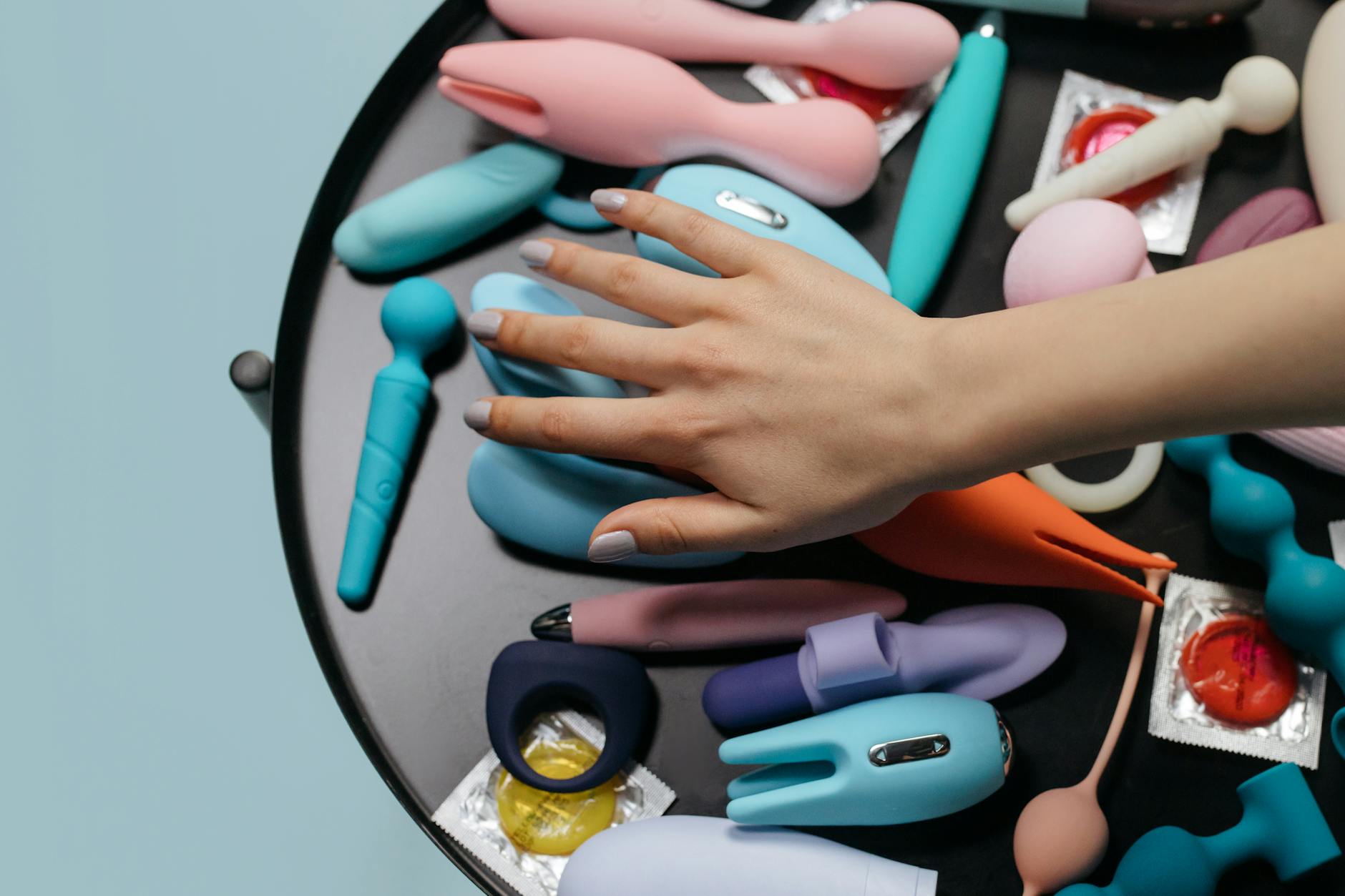
Photo by cottonbro studio on Pexels
The practical stuff that makes it actually work
Lube, always. Whether you're using the lemon vibrator during penetration or oral, a bit of water-based lube reduces friction and makes sensation clearer. It also telegraphs to your partner what you're enjoying because you'll move differently.
Start on lower settings. If this is the first time your partner is seeing or feeling the toy, going straight to level 5 is overwhelming and can feel aggressive. Start at 1 or 2. You can always increase. Showing restraint builds trust faster.
Talk during, not just after. "This feels good" or "Can you slow down a bit?" or "I like it when you do that angle" turns it into real collaboration instead of performance. Your partner isn't guessing anymore.
Battery management. Nothing kills momentum like "Oh, it's dead." Charge between uses. Keep it charged the way you'd keep your phone charged. Annoying but necessary.
Most lemon clitoral vibrators hold a charge for 1-2 hours of continuous use, so one full charge will cover multiple sessions. That's fine. It's not a problem to pause, plug in, and wait 10 minutes. Breaks in sex happen for a lot of reasons.
What happens after orgasm matters
Some people want to stop immediately after climax. Others want their partner to keep going. Some want to keep using the vibrator longer than their partner can be inside them. Figure out what you want before you're already deep in sensation.
After you've come, if your partner hasn't, the conversation is: what do they want now? Do they want you to keep using the vibrator while they finish? Do they want to switch to a different kind of stimulation? Do they want oral? The toy doesn't replace communication. It just changes the menu of options.
When using a lemon vibrator becomes a problem
It's worth noticing if you start using the toy instead of your partner rather than with your partner. If you find yourself saying "I can only come with it" and that starts to feel like a burden rather than a tool, it might be worth exploring that. Sometimes it's just logistics. Sometimes it points to something else in the connection that needs attention.
I had a client once whose partner would leave the room every time she wanted to use a vibrator. That wasn't about the toy. That was about deeper stuff around intimacy and presence that had nothing to do with clitoral stimulation. The toy just made it visible.
Introducing a lemon clitoral vibrator into partnered sex is straightforward when you frame it as collaborative. Your pleasure isn't a burden to your partner. It's information. And the couples who treat it that way end up having better sex, yes. But also better conversations, more trust, and fewer assumptions about what the other person wants.
Your partner probably wants you to feel good. They just might need permission to believe that wanting things is okay.
People also ask
How do I bring up using a vibrator if my partner thinks it means I'm not satisfied with them?
You're specific and you separate the two conversations. Say something like: "I'm satisfied with how we are together. I'm also curious about what else I can feel. These aren't competing things." Then give concrete examples. "I like when you do X. I also want to try Y sometimes." Satisfaction and curiosity are different. Most partners understand that once it's framed clearly.
Will using a lemon vibrator during sex change what my partner and I do together?
It changes the options available. It doesn't have to change what you already do. Some couples use toys every time. Some use them occasionally. Some use them for solo time and never together. The toy is flexible. You get to decide how often and in what context it appears. There's no "should" here.
What if my partner wants to use the lemon vibrator on me but I find it awkward?
Tell them. Straight up. "I like the sensation, but I feel self-conscious when you're holding it." Then problem-solve together. Maybe you hold it and they do something else with their hands. Maybe they hold it but you keep your eyes open so you're in eye contact. Maybe the first few times feel awkward and then they don't. Awkwardness isn't permanent. It's just unfamiliarity.
Can we use a lemon clitoral vibrator if my partner has erectile difficulties?
Yes, completely. Actually, a vibrator can reduce pressure on someone with erectile challenges because penetration doesn't have to be the main event. You can have penetration plus vibration, or vibration plus oral, or just vibration with hands and kissing. The pressure to perform goes down when there are more ways to define sex as successful.
How do I know if my partner is actually comfortable with me using a toy or just saying yes?
Watch their body and listen for specifics. If someone's truly comfortable, they'll engage. They'll ask questions. They'll touch it. They'll comment on sensation. If someone's uncomfortable but complying, they'll be quiet. They'll not move much. They might avoid eye contact. If you see that, pause and actually ask: "Are you okay with this? Because we can stop." Sometimes people need permission not to be okay before they can be honest.
Is there a best lemon vibrator for couples play?
Look for something with a medium-to-firm grip so your partner can hold it without it slipping. Waterproof is useful if you want to use it in the shower or if lube makes things slippery. Start with adjustable intensity levels so you can find what feels right together. The best toy is the one you'll actually use, which means it needs to feel good and be easy to manage with another person involved. If you're new to vibrators, our buying guide walks through what matters based on your sensitivity and preferences.
The bottom line
Using a lemon vibrator with a partner works when you treat it like any other conversation you have in bed. You're not hiding. You're not apologizing. You're not performing. You're just saying: this is what I want. And you're making space for them to say what they want too.