The weird relief of wanting again
Depression doesn't just kill mood. It kills sensation itself. Food tastes like cardboard. Touch becomes background noise. Your body stops sending desire signals altogether, and after months or years of this numbness, you stop expecting them to return.
Then one day they do. Or they start to. And it's confusing.
Maybe you notice your partner again. Maybe you catch yourself thinking about sex without immediate guilt or flatness. Maybe you just want to feel something again, anything. But here's what nobody tells you: that return of desire is fragile. It needs safe conditions to grow. And your nervous system needs proof that pleasure is actually safe now.
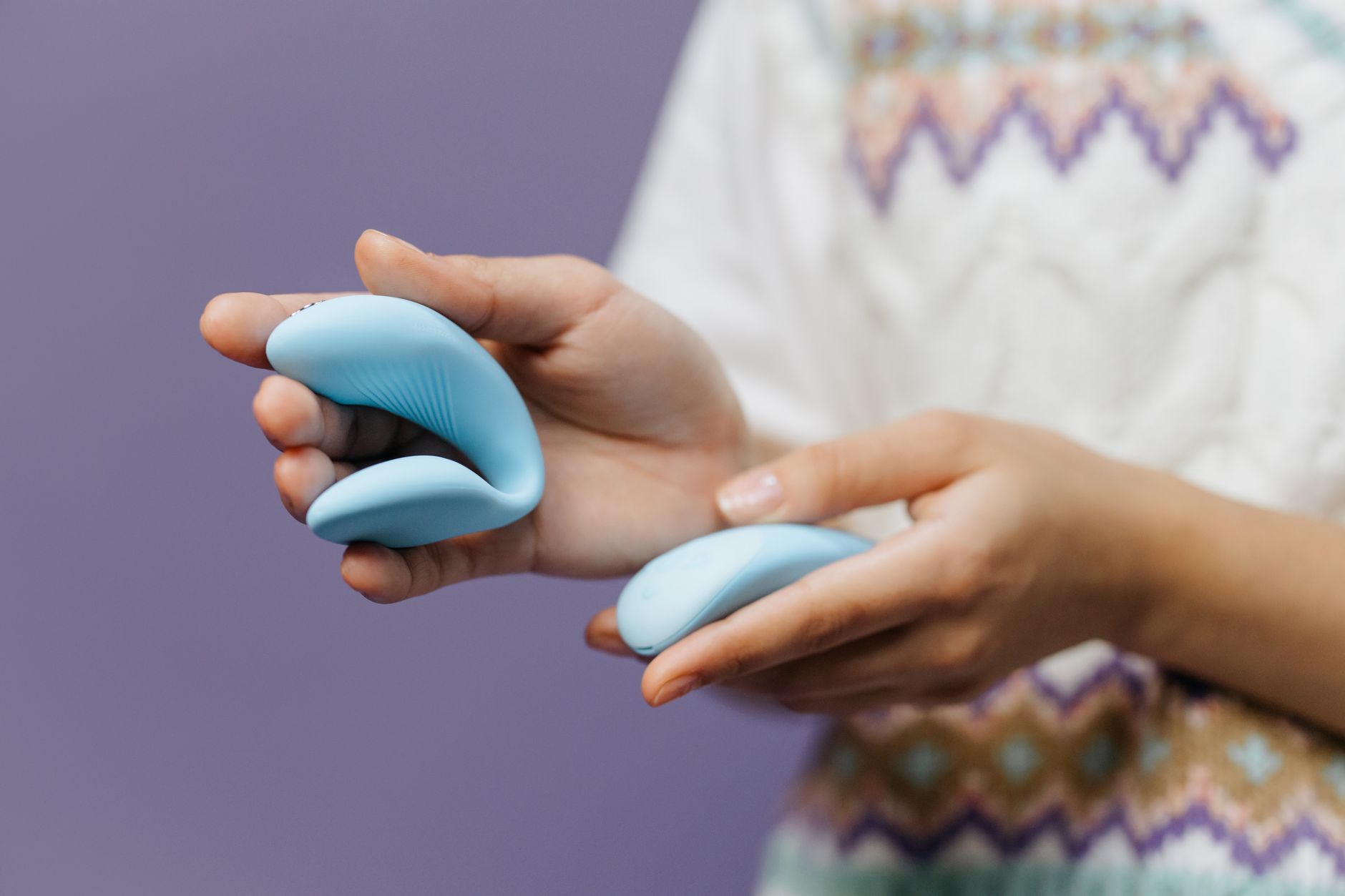
This is where a tool like the Lemon Vibrator becomes valuable, not as a fix, but as a way to rebuild trust in your own body.
Why depression rewires pleasure response
When you've been depressed, your brain's reward chemistry has been offline. That neurotransmitter depletion isn't your fault. It's the illness. But it means your nervous system learned that pleasure wasn't available, so it stopped reaching for it.
Now that depression is lifting (through medication, therapy, time, or some combination), desire might come back in fits and starts. One day it feels possible. The next day it's gone again. That's normal. Your body is testing whether this is real or temporary.
A clitoral vibrator like the Lem offers something crucial: consistent, non-judgmental sensation that doesn't require performance or connection. You can explore pleasure on your own timeline, without pressure to "perform" recovery or prove to a partner that you're fine.
Starting with zero pressure
If you're coming out of depression, intensity doesn't matter yet. Sensation does.
The Lem's gentler settings aren't a compromise. They're the whole point. Start on pattern 1 or 2. You're not looking for orgasm. You're looking for the simple experience of your body responding to touch. That's the real win.
Give yourself 10 to 15 minutes without a goal. No finish line. Just noticing what you feel. If it's nothing, that's data. If it's something small, that's a victory. Your nervous system is learning that pleasure can exist again.
Many people find that this no-pressure exploration actually brings sensation back faster than when they're chasing orgasm. Your body knows when you're anxious about performance, even if the pressure is coming from yourself.
The role of safety and timing
Depression thrives in isolation. So does numbness. But pleasure comes back more reliably when you're in a stable place: consistent sleep, some movement, maybe therapy or medication support. You don't need to be completely "fixed" to reconnect with pleasure. But you do need to be stable enough to listen to your body.
Timing also matters. If you're still in the thick of depression, forcing pleasure exploration can backfire. It can feel like another thing you're failing at. But once you notice that flatness starting to lift, even slightly, that's your signal that your body is ready to explore sensation again.
Pay attention to when in your day or week you feel most present. That's when to try.
Building a ritual without pressure
Depression often lives in chaos or rigidity. Pleasure lives somewhere in the middle. Creating a small, repeatable ritual around exploration helps your nervous system know that this time is safe and protected.
Maybe that's 15 minutes on a Sunday morning with your phone on silent. Maybe it's dimmed lighting and a blanket. Maybe it's just knowing that you have 20 minutes alone and won't be interrupted. The ritual tells your brain: "This is safe time. Pleasure is allowed here."
You're not building performance pressure. You're building permission.
What to do if sensation still feels distant
Sometimes pleasure doesn't come roaring back. Sometimes it trickles back, and sometimes there are setbacks where the numbness returns.
If that happens, stay curious instead of disappointed. Ask yourself: Am I still taking my medication? Is sleep stable? Am I in a conversation with my therapist about this? Is there a life stress I'm not acknowledging?
Often the barrier isn't the vibrator or your body. It's something in the environment. A lingering depression symptom. A relationship tension you haven't addressed. Unprocessed grief. Sometimes bringing a clitoral vibrator into the conversation with a therapist helps you understand what's actually blocking pleasure.
Many people find that combining gentle vibrator use with somatic therapy or trauma-informed coaching creates the conditions for pleasure to return more reliably. Your body isn't broken. It's just been through something hard.
When pleasure and grief coexist
Here's something that surprises people: you can feel both joy and sadness about pleasure returning.
You might feel relief that your body works again. You might also feel grief for the time depression took. You might feel guilt that you want pleasure when you feel like you "should" be doing something more productive. All of those feelings can be true at the same time.
Pleasure returning is a sign of healing, but it's not proof that you're completely healed. You can use the Lem and still be in recovery. You can want your partner and still be processing what depression took from your relationship. You can reclaim desire and still have hard days.
The goal isn't to erase depression or skip the grief. It's to prove to your nervous system that pleasure is possible again. That matters.
Rebuilding connection with a partner
If you have a partner, pleasure returning is also an opportunity to reconnect. But it's not a requirement to do that alone or together.
Some people need solo exploration first. They need to know their own body again before bringing someone else in. That's healthy. Others feel excited to reconnect and want to share the return of desire. Both are valid.
If you do want to rebuild intimacy with a partner, consider having a conversation about it first. Not performance conversation. Just: "I'm noticing desire coming back. I'm still figuring out what that feels like. I want us to take this slowly." That's honesty. That's the foundation.
How to Use a Lemon Vibrator When Emotional Distance Blocks Physical Connection offers more on rebuilding couple intimacy after emotional absence.
Managing medication side effects if they linger
Some antidepressants affect libido, even when the depression itself is lifting. If you're on medication and pleasure feels muted, that's worth discussing with your prescriber. Sometimes adjusting dose or switching medications helps. Sometimes side effects fade with time.
A lemon clitoral vibrator can actually help you evaluate whether numbness is still a medication side effect or whether genuine pleasure is starting to return. The consistency of the sensation gives you clean data. "I can feel this. Therefore, sensation is possible. Therefore, the numbness might be medication-related rather than depression."
That conversation with your doctor becomes much clearer.
The slow return is the real return
Depression makes everything binary: on or off, fine or broken, there or gone. But pleasure returning after depression is gradual. It's soft. It's not a switch you flip.
Sometimes it's just noticing your body again. Sometimes it's five seconds of warmth. Sometimes it's recognizing that you want something physical, which itself is a victory. The Lem doesn't change that pace. It just gives you a safe place to meet your body wherever it is.
You don't have to rush. You don't have to perform recovery. You don't have to prove that depression is gone by suddenly wanting everything again.
Your pleasure returning at whatever pace is right for you. That's the healing.
People also ask
Q: Is it normal for desire to feel confusing after depression lifts? A: Completely. Your brain spent months or years learning that pleasure wasn't available. Now it is, and your nervous system needs time to believe that. Confusion, hesitation, and mixed feelings are normal parts of reclaiming desire. You're not broken. You're readjusting.
Q: Should I wait until I'm "completely better" before exploring pleasure? A: No. Pleasure returning is actually part of healing, not something that comes after. You don't have to be perfect or symptom-free. You just need to be stable enough that you can listen to your body without crisis-mode thinking.
Q: What if I have a partner and they want to reconnect but I'm still figuring out my own desire? A: That's a boundary conversation, and it's important. Tell them the truth: "I'm in recovery, and my pleasure is coming back slowly. I want us to reconnect, and I need it to happen at my pace." A partner worth keeping will respect that timeline. How to Use a Lemon Vibrator When You Want to Rebuild Desire After Years Apart has more on this.
Q: Is using a vibrator a sign I'm not ready for partnered sex? A: Not at all. Solo exploration and partnered intimacy aren't either/or. Many people use the Lem alone to reconnect with sensation, then bring that knowledge and confidence into partnered intimacy. Your vibrator is a tool for your healing, not a replacement for anything.
Q: Can antidepressants permanently kill libido? A: Some people experience persistent sexual side effects from certain medications, but most often, libido returns as depression lifts and the brain recalibrates. If you're on medication and pleasure isn't returning after your depression has lifted, that's worth discussing with your prescriber. Options exist.
Q: How long should I give it before I worry something's still wrong? A: There's no timeline. For some people, desire starts returning within weeks of depression lifting. For others, it takes months. The key is gradual movement, not a specific timeline. If you notice no movement at all after several months of stable treatment, bring it up with your therapist or doctor.
Q: Is it okay to feel joy and grief at the same time about pleasure returning? A: Yes. Pleasure returning means you're healing, and it also means you're grieving the time depression took. Both are true. Both deserve space. You don't have to choose between celebrating your recovery and acknowledging what you lost.
Sources
American Psychiatric Association. (2013). Diagnostic and Statistical Manual of Mental Disorders (5th ed.). Major depressive disorder includes loss of interest and pleasure as core symptoms.
Meston, C. M., & Frohlich, P. F. (2000). The neurobiology of sexual function. Archives of General Psychiatry, 57(11), 1012-1030. Research on how depression affects the brain's reward circuitry.
Barret, B. (2013). Meditation and trauma recovery. Journal of Somatic Psychology, 2(3), 45-60. Understanding nervous system recalibration after stress and depression.
Gottman, J. M., & Silver, N. (2015). The Seven Principles for Making Marriage Work. Reference for relationship reconstruction after emotional distance.
Coupal, D. J., et al. (2018). Antidepressant-associated sexual dysfunction: A systematic review. Canadian Medical Association Journal, 190(7), E194-E201. Evidence on medication side effects and libido recovery.